Showing posts with label Satire. Show all posts

Thursday, May 16, 2019

The Future is Humor

The Office, a mockumentary based on Ricky Gervais’ sitcom The Office UK is an American 21st century television classic. While the show mainly takes place in the office of Dunder Mifflin, the show encapsulates almost every type of comedy and reaches a wide range of audiences. Depending on the episode the office uses all three types of comedy. Some episodes are very far fetched such as a sting operation on fellow competitors, this episode would be classified under the subcategory of farce, while other episodes might be considered a romantic comedy weather it be between Jim and Pam or Dwight and Angela. Many different times throughout the show these couples struggle or are separated but eventually end up back together. The most prevalent subcategory although, is satirical comedy which is seen in the vast majority of the show. 

The Office is known for its all different types of humor whether it be “hard to watch” comedy in which we as the audience know how awful the situation is yet we continue to watch knowing the outcome of the sheer stupidity. A prime example of this is when dwight purposely stages a fire at the office to test the employee's “safety awareness”. Along with this the Office has many Comic Heros, the main one being Michael Scott, played by Steve Carell. While at times he has good intentions, he can be racist, sexist, homophobic, and flat out immoral, and maybe just maybe a wee bit funny. He truly seems to care about the people around him and uses humor as his mode of expressing this. 

While he starts the show as the manager of the Scranton Branch he eventually creates his own paper company but because of his own hubris he lands right back where he started working alongside his employees at dunder mifflin. The show really encapsulates how humor is a necessary part of life. We are all human; there are good days and bad, we have our ups and downs, we lose people and meet new ones, but at the end of the day it's up to us to bring laughter and joy into the people around us lives.

Family Guy enlightens an imperfect world

Family Guy is an animated sitcom created by Seth Macfarlane surrounding the Griffin Family. The creator, Mr. Macfarlane uses many techniques of satire to help break down many prevalent stereotypes in the US, doing so in a light hearted manner. From a parody of Star Wars or stewie, a baby, taking over the world, family guy uses just about every satirical technique in the books and then a few. One of the creators favorite techniques to use is hyperbole and we see this throughout the show. An example of this would be between meg and her bully, in the episode the bully wants to “punch her pretty”. While you can’t actually punch someone’s face so hard they turn pretty, the bully is clearly exaggerating.

Family Guy has broken just about every taboo; terrorism, pedophilia, god/jesus, abortion, physical/mental disabilities, Transgenders and even AIDS along with just about every other racial stereotype, so why do people continue watching this show? There are two important things that the creators of family guy do so that they continue airing episodes twenty some years later. First and most importantly is they do not single out one group in particular but instead, they poke fun at many different (and many times) very taboo things. By doing this they are not marginalizing one specific group and instead make fun of human nature itself. I think what the show is really going after is the fact that we make mistakes, we’re ignorant people, and we all have our flaws and imperfections but when we can learn to laugh with each other instead of at each other, we are one step closer to a better world.

Thursday, March 7, 2019

Margot Robbie's Beautiful Perception

In Vogue's work of Margot Robbie's morning routine, the use of a parody was used to poke fun at the lengths wealthy people go to reach an image of perfection. The parody was her reenacting a scene from American Psycho. She woke up in the morning, to "make a video" of her morning getting ready routine, but as she did so, she spoke in a mysterious monotone voice. To achieve her level of beauty, you would need to replicate her exact routine, of exuberant peels, masks, and unpronounceable  products. The video used a parody, the imitation of someone's work, to ridicule how the image of women is always in need to reach absurd levels of perfection. The video itself is similar to videos today about morning routines, and how to look like a specific person if you follow their routine.

Monday, March 4, 2019

The Princess Bride: Romance, Comedy, or Romantic Comedy?

The Princess Bride is a comedy that has stood the test of time and is known for its great storytelling. It begins with a boy who is home sick and his grandpa comes to read to him. As he reads, the viewer then watches the story, so much so that you forget it’s even being told. Within the book, Wesley, a farm hand, is in love with a girl named Buttercup but he is sent off to sea where he becomes the “Dread Pirate Roberts” in secrecy and fakes his own death. Buttercup’s heartbreak makes her vow to never love again. Then there are Inigo, Vezzini, and Fezzik. These are three con men who want to start a war between Florin and Guilder by kidnapping the princess to-be, Buttercup. Throughout the rest of the movie these main characters become friends, enemies, lovers, and teammates.

The Princess Bride shows characteristics of almost all types of comedy, the first being farce. Although it uses satire and a deeper sense of comedy, there also still those comedic moments when, for example, the Albino gets hit on the head so hard he becomes unconscious, Inigo falls face first into his food, and when Fezzik and Inigo play childish rhyming games. If The Princess Bride was only a farce, it would still be a fantastic movie, but they take their comedy even further.

The Princess Bride is also a romantic comedy because the heart of the story is love story between Wesley and Buttercup. However, because of the funny lines, exaggerated action, things that clearly are not real or are clearly staged, The Princess Bride isn’t just a romance movie.

The Princess Bride is clearly a satirical movie. From the beginning, the movie has many fairy tale elements: princesses, castles, true love, happy endings, but they are mocked and the story doesn’t turn out the way a normal fairy tale would. The wittiest character is by far Wesley, who is constantly shooting others down with his sarcasm and mockery. With each clever line, Wesley has the audience cracking up by the ends of his scenes. The movie also does a great job of pulling the reader into the “fairy tale” story, but right when you become really devoted to it, it flashes back to the reality of the grandpa and grandson. These two characters add a lot to the comedy of the movie because they mock and judge the story, emphasizing how much it isn’t a fairy tale.

Finally, almost every character is changed by the end of the movie. Every character has a motive that drives them forward, avoiding any flat characters. For example, Inigo wants to avenge his father’s death, Wesley wants to reunite with Buttercup, and Prince Humperdink wants to take over both the lands as king. The only flat character is Buttercup, the damsel in distress, who really serves no purpose other than being saved.

The Princess Bride is anything but unadaptable to the modern era. The jokes and comedy have stood the test of time and never fail to make the audience laugh.

Sunday, March 3, 2019

Big Mouth Making Big Moves

Any viewer of the hit Netflix show Big Mouth knows that the beloved series is also making some pretty groundbreaking moves. The show, created by Jordan Peele and John Mulvaney, is brutally honest, unapologetically explicit, and most importantly extremely hilarious.

The series focuses on middle school kids about to be, or already going through puberty, personifying puberty through the always-funny Hormone Monsters. The point of the show is to highlight the big moments for the pre-teens (first crushes, first periods, and many more firsts that don't need to be explained). Even the theme song ("Changes" by Charles Bradley) embodies the content of the show perfectly.

While the dialogue always puts a smile on the viewer's face, Big Mouth is also able to touch on key subjects that aren't talked about often enough. A great example is the song in the video above, rightfully titled "I Love My Body." It is clear that, while the scene is funny, the writers are also clearly implying the larger message that all women's bodies are things to be loved.

The show also goes through the human anatomy in depth, hitting things that are definitely not in most health classes, as well as informing the viewer on menstruation, puberty, and hormones in general. The fact that the show is funny only ensures that whoever is watching is able to laugh and become attached to what's on the screen.

The point is that comedy can be used as a platform to educate a nation, or in this case whoever has access to a Netflix account. Human beings love the feeling of laughter. Shows and movies such as Big Mouth have utilized that feeling and added essential messages on top of it that result in everyone being able to take away something useful and worthwhile to the world.

Romance in the 21st Century

If you are reading this, you are reading this because you want to navigate the trials and tribulations of dating in the 21st century. The first thing I will tell you as your guide is that you have nothing to fear. Dating in this day and age is extremely easy. It is so easy to find a mate these days, that everyone seems to be doing it. All you need are three simple things:

1. The ability to read minds
2. Money, lots of it
3. Completely unrealistic expectations for your future partner

Publicity is also crucial to a relationship. You see, these days it's all about social media. We all know the more cute pictures of you and your partner you post on Instagram, the happier you are. It's factually proven that even if you're fighting with your other half if you post a picture of together, your conflict will be resolved. Combined with the posting of pictures of your loved one to social media, when you get into a relationship you must realize that you are no longer an individual. You are now the property of whomever you are dating. I know this may sound jarring but relax. It's not nearly as bad as it sounds. In fact, it's amazing! Who wouldn't want to be one half of a whole, completely lack individuality, and essentially let go of anything that makes you happy outside of the relationship you're in? I know I do. 

Dating these days is all about the aesthetic. It's about how pleasing your relationship looks to other people and I appreciate that. It's not about irrelevant things like having a healthy relationship, being happy, or maintaining individual happiness. It's all about how good you and your partner look to the world which is good. The world needs more fake but pretty things to look at. 

Saturday, February 23, 2019

The Satire of SNL's Take on the Pepsi Ad

The show Saturday Night Live always finds a way to make light of current events, oftentimes creating their spin on an event just days after it occurs. Many times their skits will act as satire commenting on the ridiculousness of certain events. One such event that SNL satirized was Kendall Jenner's Pepsi commercial which did not exactly strike the right tone with its audience. SNL's fake ad follows the director of the ad moments before filming as he tries to call his friends and family to see if his vision for the commercial is appropriate.


SNL is satirizing how the media will use racial or political protests and tensions as a means to further their own agenda under the guise of representation. The satire in the skit comes mainly in the form of  situational irony. The skit uses situational irony by making the viewer think that when he calls his sister and friend their reaction will be positive because of the director's excitement but all three of the people he calls, including the neighbor that he doesn't know, tell him that his idea is terrible because its just using people's cultures to sell soda. This is to make the point that seemingly everyone realizes that the companies are simply using cultural differences and political unrest to make a profit. Situational irony is also present when the director tells the person on the phone that he is celebrating different cultures but the camera cuts to show that they are only showing stereotypes from those cultures such as black culture being two guys dancing to hip hop music or Asian culture being an Asian man playing the cello. This specific scene comments on how many companies forms of representing and celebrating cultures are really just stereotypes that are thrown in to hopefully boost sales. 

Friday, February 22, 2019

President Barbie

In this SNL skit, "President Barbie", the little girls who are being convinced to buy the barbie doll are completed uninterested in the item. The ad speaker tries to persuade them that the barbie doll is a great toy to play with because it's a female just like them and on top of that, it's a presidential barbie.

This scene is a perfect example of situational irony. When you first watch the video, you expect for the girls to fall in love with the female doll, especially one that's in a presidential position. Instead, it's the exact opposite. They decide not to play with dolls and play with their other toys such as legos.
The skit makes fun of the little girls and their way of thinking. The idea of the doll is ultimately to try to change the way people think of women in general I guess by making a doll that's in a high position.

Sensitivity Training

The video above is a scene from the hit television show The Office. It shows the workers of Dunder Mifflin undergoing "sensitivity training" run by their boss Michael Scott. Michael, who is known for making multiple borderline racist and homophobic jokes, claims that it is against the rules to make fun of something for things they can't control, but okay when it is something they can. He goes on to give examples using Oscar Martinez (a gay man in the office), claiming that it was his choice to be gay, and therefore making jokes about it are absolutely fine. Michael goes on to make a list of things that people can no longer be made fun of for, but ends up making lots of exceptions.

This particular scene in the video above makes use of verbal irony specifically. When Kevin asks to stop being made fun of for his weight, Michael claims it's too broad and instead writes "huge gut." While Michael claims the list is a way to keep his coworkers from being made fun of, he is really using it as a tool to continue making jokes.

While the scene is hilarious in multiple ways, there are certain aspects that are important to take note of. It is clear that things such as being gay are not a choice, but simply the way that a person is born. It is a joke in the show, but also provokes the audience to think about why they are laughing in the first place. Other items on the list include weight, height, and facial features. It's important to notice that a person has no control over these things, even though they are being treated as such for the sake of satire and comedy.

Satire

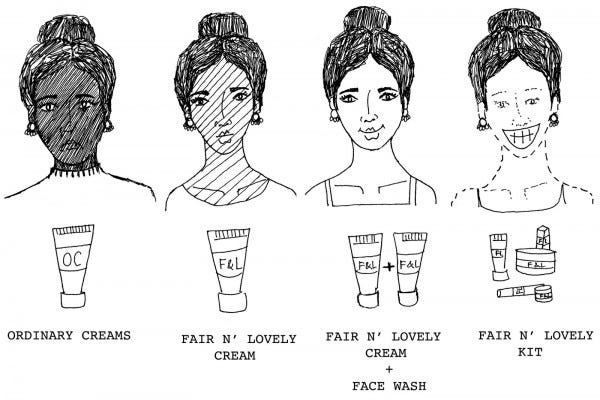
Through the past decades' people of color, men and women have been subjected to the ideology that they are superior to another, black men and women are oftentimes based on the shade of their skin. It is commonly seen on social media, pictures of light skin vs. dark skin - at the bottom “Darkskins winning”, “ Darkskins ain’t got nothing on Light Skinned”, “I want mixed babies” or “If only she was lighter”- etc with heart eye emojis next to it. The plague of colorism was invented by colonization of white men, commonly slave masters that gave lighter slaves better jobs, such as working in the kitchen, maids, or nannies - their darker sibling, cousin, mother, and our father worked in the harsh fields. As children, they grew up to know that depending on their complexion where they’d be placed in society. Society still values this ideology today, with this societal biased on the rise, there has been an increasing number of fetish for one shade out of the spectrum of beauty.

More often than not, many Black men and women have experienced the murky and heavy effects of colorism. Daughters using lighter dolls to show a standard of Eurocentric beauty;the darker dolls to be ugly and dirty. The concern during pregnancy, darker mothers rubbing their bellies thinking what will their child’s hair texture be like? Or their eye color, or skin? At the hospital, their jaw drops when they receive a fair child with brown hair. As their child grows up, they pray they don't turn against them to lighter roots, and never to sep in the brown soil they were conceived in.

My design will end this worry, and only provide the unbiased beauty of character. A guaranteed strategy to cure all the consequences of colonization and fetishizing. Throughout the years, I have tried to be complacent, but the media shows no remorse or much change. We have tried to show all complexions are beautiful, but black children are still troubled- they look in the mirror and say “I’ve always been black and ugly¨. It is repulsive to know how important skin color is in our society. In my experience, I’ve known people to bleach their skin just to fit in, and feel beautiful. My idea might be the only way to save us from the chance of a race going to war within itself. We must start by temporarily going blind. This can be achieved with your God given limbs. I’ve tried it myself actually, my favorite method is using my thumb and finger pressing on the bone of the eye socket, soon you’ll be able to experience a perfect vision of beauty. There are several benefits of us going blind.

You can now walk around and actually learn a person’s personality, their goals, and interests. With this in mind, everyone will benefit, especially your black male friend who offensively says the common cheer ¨I prefer Light Skinned girls¨.This should also give light to the issues other people of the color face within themselves. No more race wars, like really imagine not having to debate about race issues in class without someone saying “Wow, I really, like feel like… black people should work on black on black crime." If we temporarily blind ourselves we can just ignore the issues of colorism all together, and the close relationship it has with racism. By ignoring them, we will no longer have to worry about the damaging results, to ourselves and our future.


Satire: The Simpsons

The Simpsons series, created by Matt Groening and the show focuses on satirizing the modern day American family. In this episode, originally from 2008 during the 2008 Presidential Election between John McCain and President Obama. Homer goes to the voting booth in an attempt to vote for President Obama, however, the machine malfunctions and counts the vote for McCain instead. As Homer realizes that machine is rigged, it suddenly sucks him in and harms Homer in the process. Homer tumbles out of the machine, unconscious and a man sticks an "I voted" sticker on his forehead.


I think that the clip is satirizing the idea that the American electronic voting machines are rigged or flaws in the overall voting process.

There are multiple techniques used within the short clip to help convey the message:
  1. A parody was used to make fun of the voting machines in Ohio during the 2008 Presidential Election when the machines mysteriously switched votes from President Obama to John McCain. 
  2. Verbal irony is used when Homer says "I would like to vote for President, Governor, or anything else that will take money away from our parks and libraries" (The irony is that voting for someone is supposed to bring positive changes not negative ones). 
  3. Once again verbal irony/incongruity is used when Homer says "This doesn't happen in America! Maybe Ohio, but not in America!" (Ohio is in America!)
I think that this clip overall is an effective use of satire because it emphasized concerns that the American people had our voting system by using the Ohio incident as an example. In fact, people today still have the same concerns regarding electronic voting systems today as they did ten years ago, especially after the 2016 Presidential Election. Read more about it here.

Melanianade

In the video,  Melanianade, made by Saturday Night Live (SNL) Melania Trump (Cecily Strong), Ivanka Trump (Emily Blunt), Kellyanne Conway (Kate McKinnon), Omarosa (Sasheer Zamata) and Tiffany Trump (Vanessa Bayer) can no longer stand by Donald Trump's (Alec Baldwin) side. They all express their problems and what they're going to do. When Donald Trump comes in at the end and says, "The limo is ready. Let's go, you all look very nice, but let's go." All the women do not put up a fight and quickly follow him.
The women in the video employ understated satire as they say one thing about their feelings but their actions show the opposite of that. As well as using, parody as they use similar rhythms, scenes, and choreography to Beyoncé's music video, Lemonade. In the satire video Melania says that she cannot take standing by Donald Trump anymore and that she doesn't like being undermined or played as dumb. Kellyanne is tired of cleaning up Trump's messes, like his twitter posts or speeches, as she holds up a news paper that reads "GRAB THEM BY THE P***Y" which his face as the background. Ivanka is upset that Trump brought in Paula Jones, who's case participated in Bill Clinton's impeachment, which ruined her personal relationship with Chelsea Clinton. Tiffany is tired of being in the shadows of Ivanka and not being able to be enough for him even when she thinks she "killed" her speech. Instead of being known as Tiffany Trump she wants to be known as Tiff Maples, taking her biological mother's last name rather than Trump. Omarosa says that she is going to turn in her resignation and that she does not need a last name for him to know. The women all say that Trump is breaking them and taking it for granted that they have always been there. Melania says she will one day soon not be there anymore. The five women say that without them, Donald Trump would not be where he is today and that he would "just be that guy with the weird hair." Melanianade is not just for humor but it criticizes the women standing behind Donald Trump for staying with him. As well as criticizing Donald Trump's actions.

Hidden Message

Although Keegan-Micheal Key and Jordan Peele's Comedy TV skits "Key and Peele" are generally seen as purely comedic, there can be some main ideas or arguments behind their skits. In the skit "Prepared for the Terries" there are two characters on a plane sitting next to a random man. The two characters who are together are typically dressed differently and have very strange looking hairstyles, as well as speak in a very strange way. The two main characters proceed to explain to the man sitting next to them that they are prepared for "terries" or terrorists.


The obvious satirical device used in this skit would be irony. This would be Irony because it is conveying a message by using an extreme situation as an example of the opposite of their argument, their argument clearly being that people that you may see as strange or different than you should not be stereotyped as dangerous or a threat. The use of irony for this skit allows Key and Peele to keep the comedy aspect of their skit while also portraying the deeper message of the skit. 

To go into depth about their argument, it can be said that their argument is that people who don't look like you are portrayed as a threat to your life or crazy. In this skit by Key and Peele, they portray strange looking people who talk and act pretty strange as well, telling a passenger next to them that they are "prepared for the terries" and how they plan to defend themselves from the terrorist. in doing this they bring a 3D printed gun and box opener onto the plane to defend themselves. But in doing this, they put the other passengers at risk and therefore portrays that people that don't look the same as other people are dangerous.   


The Boondocks and its Satirical Social Commentary

The short lived (in my opinion) eight year airing of the wildly popular adult animated sitcom, The Boondocks was one of the most blunt and straightforward television shows to air on American television channels. Aaron McGruder, an accomplished African American writer, producer, and screenwriter, amongst many other professions, used this platform to expose and critique American culture and a wide array of social and political issues. The sitcom, based off of his previously written comic strip of the same name, follows a family of three that consists of Huey Freeman, the shows protagonist and future revolutionary, Riley Freeman, an 8-year-old fanatic of rap culture, and their grandfather as they experience a sudden transformation of lifestyle after they moved from the South Side of Chicago to the Suburbs of Woodcrest.

Besides every episode having a great deal of comedic content, the satirical elements that gives this show a deeper meaning allows for a much needed glimpse into our own society and the wretched way it works. Most episodes of this sitcom integrates hyperbole in its exaggerated characters and parody of real life situations to its advantage to show how ridiculous some situations and some people in our society actually are. This clip of Uncle Ruckus, an African American male who himself hates African Americans, but shows the utmost respect and admiration of white people is one example of hyperbole and parody. The show uses Uncle Ruckus’ exaggerated nature to mirror the essence in which Pastor Manning, the American pastor of the ATLAH World Missionary Church, conducts his sermons and lives his actual life. Uncle Ruckus is supposed to be the most extreme example of what happens to people and their vision of self worth as a result of generations of African Americans being told that they are nothing compared to their white counterparts. He is showcased as the most extreme version of someone who has conformed and attempted to assimilate with their culture, but in the process builds up hatred for himself and people who look just like him. His beliefs in the scene above reflect the actions of Pastor Manning, as he often delivers sermons about how African Americans are no good. The show is obviously adding comedic effect to ridicule people like Manning and Ruckus who are ignoring their self worth as it address this pressing issues that are present in the black community.

Another example of parody is very apparent as the show mirrors an actual news segment about a young boy traveling down the wrong path, seen in the embedded video below. The clip shows the obvious parallels of the real life of Latarian Milton and their version of him, “Lamilton Taeshawn”. The show is imitating the real life of this young boy and his grandmother while also using understatement / verbal irony in their version of the news clip when his grandmother tries to defend him as she says “ See, you have to understand, all children his age love stealing cars and going on high speed chases" and “You have to understand, he really likes that fried chicken”, obviously lessening the significance of all the wrong doing this child has done. In fact, no 8-year-olds love to steal cars and go on high speed chases nor do they seriously injure their grandmother because she will not buy them fried chicken.


This show uses comedy to allow African Americans to see real life situation that involve us and our culture. It also allows allows us to see the many problematic situations in our community and how we respond to them. If we can see that these characters on television look ridiculous in the way they are living their lives, we can see how we need to change ourselves in our real lives.

Blogging Satire

The first blogging assignment (unless you choose the creative, original satire project) is to discuss a work of contemporary satire: a film, TV show, song, etc, from the last few years that uses humor to make a larger point about society.

Even though we have often discussed satire of the construction of gender or race, your example does not need to involve race or gender as its primary subject matter.

Your post should include the following:
1. A summary of the work of culture -- maybe including a link to a video or lyrics.
2. An analysis of how the work uses techniques of satire -- irony, hyperbole, understatement, and/or parody.
3. An analysis of how the work is not simply making fun of certain people or institutions but how the work is trying to criticize and ultimately change society.

Note that I'm asking you to do more than just #1 -- giving us an example.  You need to analyze and reflect on that example.

And remember to also comment on two of your classmates' posts as well.

Thursday, February 21, 2019

Absolutely No Way To Prevent This

The famous newspaper "The Onion" is known for creating unique articles that will make you cry from laughter. The best part? New ones are published daily! However, the one article that caught my eye is one that is republished at least two times a month. The article, "'No Way To Prevent This,' Says Only Nation Where This Regularly Happens" is published after every mass shooting in the United States. The only difference between each article are the number of people murdered and the place.

Even though this article is republished every few weeks, the great use of situational satire and understatement never fails to make me laugh. One would expect action to be taken when mass shooting occurs "regularly". The article highlights the issue on gun control policies and presents are nation as blind to how bad the issue actually is. The article interviews a citizen to represent the popular opinion of our nation that "sometimes these things just happen and there's nothing anyone can do to stop them". This pokes fun how there are obvious steps that our nation could take forth to solve this issue however no action has been taken. Instead of policy and change we give our thoughts and prayers and present ourselves as "hopeless".

The best part about the series, is that "The Onion" will not stop publishing this piece until the United States no longer has a gun violence problem. As of right now, looks like we will all be dying of old age sitting in our rocking chairs still laughing at the same article.

Diversity Day

In the hit show The Office all of the episodes are funny but most also have satirical value.  In most episodes, gender stereotypes are brought up, racism is prevalent and some office not so friendly jokes are being played usually on the coworkers that are part of a minority.  In The Office episode called Diversity Day, Micheal Scott (the boss) tries to bring everyone in the office together by defacing and making light of common stereotypes faced by minorities.  He wants everyone to put a different ethnicity, race or culture on their forehead and then have a partner talk to the person as if they were talking to the person of that ethnicity, race or culture.  Of course, the point of the exercise was to show that no matter the ethnicity, everyone in the office is themselves and can be talked to with equality.  However, things go aerie and the exercise turns into a racist fiasco. 


This episode is definitely one of the most funny ones in my book but also holds many racist stereotypes that we can actually learn from.  The clip does a fantastic job of highlighting every ethnicity's and cultures untrue assumptions that people make but while doing it in a funny manner.  This satire is very basic and we can see the absurdity of the employees and how they are acting but many of these assumptions can be seen in real life.  While Michael is talking to Kelly (the Indian lady) he is being extremely racist and then gets slapped for what he said.  While Dwight (the "Asian" guy) brings up how Pam is a bad driver because hes a woman and she is also "Jewish" so he says shalom and asks for a loan.  These are all common stereotypes and the office does a perfect job of making us feel surprised, aware and maybe even uncomfortable.  In the clip we can see examples of hyperbole and situational irony.  This clip is an example of a hyperbole because everything is blown out of proportion and Micheal has sort of a twisted and absurd way of bringing his co workers together regardless of their differences. It is ironic that Micheal would be a hero like Martin Luther King Junior and Stanley would "randomly" get the black card.  Overall this episode was funny based on making fun of people but it brought awareness to common stereotypes that are heard in our society and how they can be damaging or absurd.

Not So Royal

It's not very difficult in today's world to find examples of satire. We live in a society where people constantly critique others as they try to defend why there way is the best. There are lots of great opinions and messages sent out through satires, and I found one of my favorites in the song "Royals" by Lorde.
Lorde makes it very clear that she isn't making music for the money and fame. In fact, she's actually criticizing the common lifestyle of those with loads of money and fame. Using mockery and hyperboles, she is able to speak her opinion that life isn't about materialistic things or status. In the hook, Lorde sings,

Jet planes, islands, tigers on a gold leash
We don't care, we aren't caught up in your love affair.

As she mocks tremendously rich people, she uses the hyperbole of "tigers on a gold leash." This is an extreme exaggeration of what rich people are like. It's very unrealistic, making it a quiet diss towards the wealthy and famous. Although I'm sure Lorde loves messing with the one percent and fellow celebrities, there are deeper meanings behind the lyrics of her song. By dismissing the actions and lifestyle of the obnoxious rich people, Lorde is also dismissing the popular conception that money and fame equates to happiness. After listing off a list of hyperboles referring to the rich, she sings,

That kind of lux just ain't for us
We crave a different kind of buzz.

This statement alone strengthens the message that happiness can be found elsewhere. The "buzz," referring to happiness, can be found in other areas than money and fame. Although Lorde's "Royals" can be claimed as ironic, due to her recent success and fame, it still spreads a great message to our society. She uses her experiences as a famous, rich celebrity, as well as her platform, to dismiss the idea that people need money and a high reputation to be happy. Hopefully, this message can continue to be spread, and more celebrities can reveal the realities of being famous.

"All 3.6 Billion Men Are Like This!"

In the television show "Crazy Ex-Girlfriend," the main characters often use silly comedic songs to touch on difficult subjects such as mental health, sexism, and societal standards. I chose the satire: "Let's Generalize about Men," which is a man-hating song that reflects on why men are hated and mocks how women talk about them.

The characters in the song are all women who have recently had trouble with their relationships with men. They're all caught up in the terrible things their boyfriends have done, and talk about how every single man is an emotionally stunted child. The song encourages the stereotype of single women who drink and complain about men, but also the stereotype that men argue how not all men are like this.

The women say, "All men are completely repressed/...There are no exceptions/ All 3.6 billion men are like this." This satire uses hyperbole to acknowledge that in reality, not all men are like this. It's impossible that 3.6 billion men are childish and never listen, but the women use this generalization to explain why all of their relationships have gone poorly.

They also say, "And why do men never listen and only think about themselves?/ As opposed to women who always listen and never think about themselves?" This question brings up the fact that not all women have these characteristics, either. It examines the stereotypes in general, and how you can't accurately depict what a group of billions of people are really like. Especially if the stereotype for them includes multiple requirements of their character.

The women then bring up the question, "Hey what about gay men?/ Gay men are all really great/ Every single one.../ They're all completely adorable and fun!" This continues to mock the stereotype about how straight women talk about men, and plays into the stereotypes of gay men. The women truly feel depressed and hurt about the straight men they have dated, and come to the conclusion that every single gay man must be "adorable and fun!" This represents another hyperbole, which brings up the notion that all gay men must have this kind of character, and doesn't bring up the fact that these are just stereotypes, and don't accurately depict the true character every single man on the planet.

I think that this satire is not just mocking women for generalizing about men, but also critiquing sexist stereotypes and how they unknowingly permeate into our society. These women, in particular, use these stereotypes to make themselves feel better about their past relationships. But, they don't acknowledge the fact that these stereotypes are extremely harmful. This satirical song is trying to make their audience see that we should stop generalizing about any group of people, specifically men, gay men, and women. We shouldn't jump to the conclusion that all straight men/gay men/women are like this if we have only had a few encounters with a person that fits this stereotype.


"Help, help, I'm being repressed!": Satire in Monty Python and the Holy Grail

Frequently ranked as one of the best comedies of all time, Monty Python and the Holy Grail is undeniable comedic genius. Monty Python and the Holy Grail is a series of comedic sketches which parody the legend of King Arthur's journey to the Holy Grail. During his travels King Arthur encounters two peasants, one of whom is named Dennis, who spout anarcho-syndicalist ideology in resistance to Arthur's repression of their freedom by being king.


The most obvious technique of satire used in this Monty Python sketch is parody. The legend of King Arthur and the quest for the Holy Grail is quite well known, and through costumes and setting they are able to recreate it. The comedy of the parody comes from the less than perfect recreation of King Arthur-rather than actually riding a horse Arthur gallops about while his servant bangs coconuts together to mimic hoofbeats. Instead of working the peasants sit in the mud and slap it about in an exaggeration of the actual menial work done by 10th century peasants. 
The skit also relies on hyperbole. As Arthur attempts to find out who lives in the neighboring castle, the peasants object to his superior attitude and reject his right to call himself king:


King Arthur: Well, I am king.
Dennis: Oh, king eh? Very nice. And how'd you get that, eh? By exploiting the workers. By hanging on to outdated imperialist dogma which perpetuates the economic and social differences in our society. If there's ever gonna be any progress...

The language here exaggerates the loquacity of the peasant in order to make fun of the unnecessary complexity of language in progressive thought.

Monty Python uses situational irony to as a tool of satire in this skit. In a scene in which a king encounters peasants the audience may expect respectful and deferential treatment from the peasants. Instead, Dennis and the peasant woman are downright rude and challenge everything the Arthur says with anarcho-syndicalist rejections of authority.

Finally, this Monty Python skit is satirical because it uses these tools of comedy in order to comment on a larger aspect of society. The dialogue between Arthur and the peasants shows a power dynamic between leaders and citizens which bring up the degree of autonomy that people should have from the government. When Arthur shakes Dennis he screams, "Ah, now we see the violence inherent in the system!" The skit criticizes an over use of power by leaders and questions what determines the authority of leaders at all. When asked why he is the king, Arthur says the Lady of Lake gave him Excalibur, to which Dennis replies, "Strange women lying in ponds distributing swords is no basis for a system of government." Although placed in a historical context, Monty Python and the Holy Grail's skit criticizes the same power relations between the government and the governed that existed during it's 1975 release and continue to exist to this day.