Friday, March 23, 2018

Argo, Iran, and Orientalism

Orientalism, a theory defined by the exaggerated culture and negative connotations associated with the East and Middle East, is evident in the United States. One example of this is the film Argo. Argo is an American film released in 2012. This film follows the story of 6 Americans and a Canadian Ambassador taken hostage in the U.S. Embassy.

To begin, I watched the film when it came out in 2012. As a Iranian-American 12 year old, I was very confused. I was confused because Iranians were being pictured in a way that even scared me. I began to think how others would view my people and culture.

While the story and events captured in Argo did happen, the way they were presented concerned me. In the beginning of the film, various clips of the history of Iran's government and the U.S.'s involvement in it. Even though this information is true it sees to be thrown in. I feel it is added in for cinematic effect rather than to inform viewers of the relationship between the U.S. and Iran. What follows this is exactly what Orientalism is highlighting, the negative connotations associated with this part of the world. The film takes the route of victimizing the hostages and illustrating the Iranians as barbaric. The filmmakers made this film for entertainment, for a thrill. This is obvious through scenes with mobs of people chanting and the main characters fighting their way through them.

Overall, this film fails to accurately present the events that took place or the real relationship between the U.S. and Iran. In addition the film heightens the fear Americans have for Iran and gives them one very narrow lens to view Iran. There were many opportunities to educate the Western viewers of the film in what happened and Iranians' emotions . Instead, all audience members get are angry and villianized characters. Argo is just one example of Orietnalism in the United States and the reinforcement of stereotypes of Iran. 
Running From Orientalism

As a runner, I spend a lot of my time reading about and researching various training and fueling techniques. I focus, in particular, on Olympic level marathoners and long-distance runners. Because of this, most of my research focuses on runners from East Africa- with the top distance runners consistently being citizens of Ethiopia and Kenya. Throughout my research, I have encountered two very distinct views of the running practices of these elite runners from African Countries. One: the genetic makeup of people from East Africa has enabled them to develop the traits that are ideal for running (high pain tolerance, slender build, efficient stride, ect.). The other view, however, is that East African communities have remained in a primitive state that has left the skill of running to be one their only necessary skills or pastimes.

While the first theory has both its proponents and critiques, it is rarely focused on. Instead, researchers and authors alike hone in on the potential of the second theory. This theory capitalizes on the "widespread poverty" and "necessitating nature" of running to escape from animals and to retrieve water from far away wells. While it's hard to argue that these things do not exist in East African countries- yes, there is poverty, and yes there are wild animals in many parts of East Africa. However. While many Western athletes are focused on the "exotic" and "primitive upbringing" of East African runners, they fail to note the many other factors that contribute to their racing success. They don't mention, for example, the altitude at which they practice at, the heat they endure yearly, or the immense drive and determination that is instilled in them- like with all elite athletes.

The running community remains in awe of East African runners, but instead of focusing on their workouts or fueling, they do what Westerners have been doing for years on end: they degrade them by implying their skills are nothing but primitive and evolutionary instincts with no basis in their determination or hard work. This is a subtle and not often recognized aspect of orientalism that arises in many sports, though the domination of East African talent in long distance running is certainly what brought on this specific and pointed examination.


Aladdin

Throughout my entire childhood, Aladdin was a favorite of mine. My middle school performed the musical, and I thought it was amazing. I liked the music, and it even got my thinking about complicated topics, like morality, when Aladdin stole bread because he was poor and starving. However, I never stopped to think about the orientalism that appeared in the film.

As an American, I was not even phased by the clearly prejudie interpretation of middle eastern culture that appeared in the movie. The saddest part is, I am not alone. Alladin is one of, if not the, most popular Disney movie.

As Americans, we are not even phased by the lyrics in the song "Arabian Nights",
Oh, I come from a land, from a faraway place
Where the caravan camels roam
Where it's flat and immense
And the heat is intense
It's barbaric, but hey, it's home
These lyrics blantantly express that the character's home is a mysterious, "faraway", place that is "barbaric". I was not phased by these lyrics, because in my society and culture, Middle Eastern and Asian culture are perceived as such. Aladdin is not the only movie or piece of art that depicts Asia and the Middle East in such a way. 

Orientalism in the Lion King?

I was a bit confused how the Lion King was orientalist, so I searched up other people's arguments for why it is. I found less than five people actually arguing it, but the main point seems to be that it depicts a false version of Africa, in which it is completely undeveloped, wild, and devoid of humans. I don't see how that is different than the version of North America given in Brother Bear, another Disney movie with a complete focus on the native animals. Not having humans was necessary for the story of the movie, as it is a rough adaptation of Hamlet and any presence of would either completely shift the tone of the move, or be unnecessary. Not to mention that are are actually places in Africa where no people live and are populated with different types of animals, such as the many nature reserves.

An actual argument for imperialism in the Lion King that I didn't see anywhere would be how the shadowlands, where the hyenas live, and Scar, the main villain, all share the motif of darkness while the good characters are all whiter. Even this however, doesn't stand very well to scrutiny as the theme of light=good and dark=bad is present in a wide variety of cultures, dating back to the ancient Middle East.

While I am not denying the existence of Orientalism in general, I think it isn't constructive to look for it where it doesn't exist, especially because so many actual examples exist.

There is a very good chance there are actually good points towards Orientalism being present in the Lion King, so if anyone has them I would love for them to leave a comment.

Orientalism and Modern Ideas


Western culture thrives and perpetuates its false superior identity by putting itself above “others”. For years, the West has treated East Asian people as inferior and without true worth. Characters such as Charlie Chan, played by a white actor, helped to build the racist caricatures so common in both the media and the minds of many in the West. By marginalizing an entire race, western culture lifts itself up and perpetuates the myths inherent in Orientalism. Growing up in the aftermath of generations that never bothered to embrace Eastern cultures makes it imperative that we move beyond the stereotypes. Years of minimizing and manipulating the history of Asian people in the media and in Western society itself is not something easily erased. Prejudices run deep and ignorance still prevails in many if not most areas of the United States.

The lack of accurate Asian representation in movies and television perpetuates Orientalism. Movies like Kung Fu Panda dilute Chinese culture by using Asians for fewer than a quarter of the voice actors. It’s not that talented Asian actors do not exist, it’s that Hollywood chooses to ignore non-white talent. In Indiana Jones and The Temple of Doom, “exotic Asian hosts” feed Indy and his friends chilled monkey brains for dessert. By portraying Asian people and their culture as mysterious and strange, Hollywood profits at the cost of belittling and marginalizing a race of people. Being raised in
a culture where many people believe it is OK to misrepresent and offend through the perpetuation of Orientalism makes it even more important that we demand more honest depictions of Asian people. Hopefully this is the generation that will move beyond what separates us and learns to embrace cultural differences without fear and ridicule.

Orientalism in TinTin

Although the famous comic, TinTin was a favorite of mine growing up, it is one of the worst perpetrators of Orientalism of any comic series ever. TinTin is a young french reporter who travels from place to place reporting crimes, or any type of unusual activities. As a young child, these adventures he went on to what were mysterious, vastly misrepresented countries were some of my very favorite stories. However, in hindsight I can now realize just how awfully other cultures and places were depicted by this Eurocentric story line.

The two editions that I believe best illustrate the lack of social awareness are "TinTin in the Congo", and "The Blue Lotus". I never read the former, because even in a less progressive 1970's America, people still had the wherewithal to realize it was incredible racist and insensitive and banned the sale of it in the US. However, the second, "The Blue Lotus", was a story I used to love. The story depicted TinTin traveling to China to bust up and illegal operation being run out of an Opium den. Even while typing this I am struggling to understand how even at such a young age that the stereotypes were lost on me and I still enjoyed the Comic. Despite that, there are more issues than just Chinese stereotypes in this edition.

One of those being the idea of TinTin continually saving the day in far of  lands is in continuation with the false idea that it takes a white European male to save the day. In addition to this, is the fact that the Chinese writing used in the comic was similar situation to what happened in the Homeland episode, it was simply just "Squibbly". Overall, the comic TinTin, while a large part of my childhood, is filled with awful stereotypes and Orientalism, and should probably have many of its editions discontinued.


It's Still Ours: The Beatles and Orientalism in a Post-Colonial World

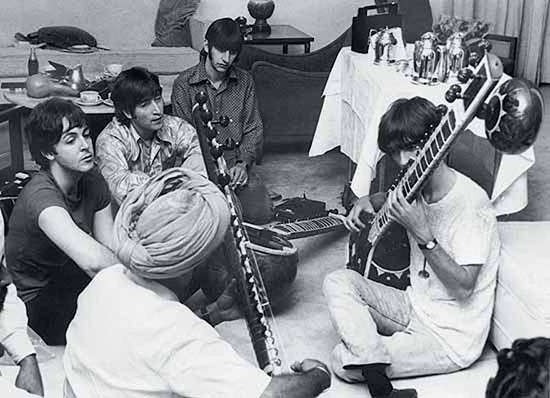
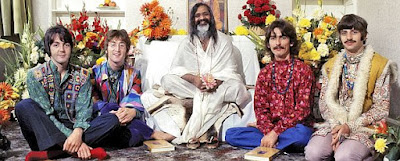
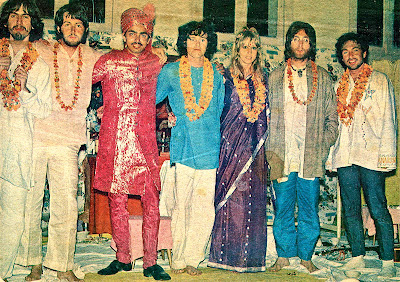
The 1960's saw The Beatles own the world, and as they clearly believed, the cultures throughout it. The Beatles relationship with India and its culture alone demonstrates how their attitudes towards India, even in a post-colonial world, were stereotypical, white washed, and largely unfair. There is, however, an interesting nuance to the bands use of Indian culture. Their perception and portrayal of Indian culture was not in the pursuit of justifying and continuing British economic and military domination of South Asian countries, but was more a repudiation of the world in which they had grown up.
Image result for the beatles india

While this seems to soften the offense, they still managed to display India in a wholly inaccurate way. The Beatles' reputation for drugs helped to conflate the culture with that of psychedelics, music, and sex. Their portrayal of India is one of languid and rampant drug use and spiritual awakenings. This bleeds not only into their personal lives (George Harrison especially began to embrace Hinduism and Indian cultural practices) but their music as well, where they featured psychedelic musical themes and extensive use of cultural instruments such as the sitar.
Image result for the beatles india sitar
All of this culminates into an inaccurate depiction of an Indian way of life. It romanticizes aspects of a cultures created and dominated by white, largely English musicians (The Kinks and the Yardbirds would also feature similar themes), with a foreign tagged placed on it; a price change to make it more appealing and exotic to the masses. 

Image result for the beatles india

Orientalism

In today's society an orientalist mindset is common. I think that the binary and power dynamic of Us vs them is natural no matter where you live. It is natural to consider your social group the superior one. Thus, without a good understanding of the "east" or the "other" in any instance-without mutual recognition- misunderstanding, even injustice, takes place. For instance, I have never been east of the east coast of the United States and for most Americans the "east" isn't as popular a travel destination as Europe or other states. This allows the media to take advantage of people's lack of knowledge and create entertainment that feeds off of people's willingness to believe that they are the "normal" or the "civilized." Movies such as Aladdin and Doctor Strange present the "east" as a mystery, as a place with unique powers only used for good when a western hero arrives.

I think that "The God of Small Things" is written for a "western" audience to create mutual recognition and empathy with the experiences of those of a different culture. However, I think that it also emphasizes the injustices that people everywhere are familiar with. Issues of social class, police brutality, and domestic abuse force the reader to consider classism, racism and sexism, mostly from the innocent point of view of children. Roy says in the "The God of Small Things", "[the violence of the police was] impelled by feelings that were primal yet paradoxically impersonal. Feelings of contempt born of inchoate, unacknowledged fear- civilization's fear of nature, men's fear of women, power's fear of powerlessness." These fears are seen in every society, but manifest themselves in different ways. I think by understanding this we can take a step away from the orientalist mindset.

Orientalism

Orientalism is the patronizing way Western attitude towards Middle Eastern, Asian, and North African societies.  In one aspect, it is a way of viewing that imagines and exaggerates the difference between of Arab peoples and cultures to that of Western cultures. Early examples of Orientalism were depicted in the early 19th and 20th century through European paintings and photographs. In the paintings, Arabian culture is depicted as a mysterious place of sand, harems, and belly dancers. A modern-day example of Orientalism is Disney's movie Aladdin. Growing up,  I loved watching the movie. As I got older, I realized how unjust portrayal of Arab culture. In the opening song, Arabian Nights, it exaggerates how Aladdin's home is a very mysterious and faraway place much different than the audience. For example, "When they cut off you ear if they don't like your face, it's barbaric, but hey, it's home." It blatantly depicts Arab culture as ruthless and uncivilized. Aladdin is a clear example of Orientalism.

I think we do have an Orientalism mindset even though individuals from Western cultures will not admit it. Or, they are unconsciously unaware that they do. For example, there this is viner named Anwar Jibawi. He is Palestinian-American  and in the past had created stereotypical vines about Arab culture to get laughs and views. In one vine, he is dressed in traditional clothing and outside the elevator. He talks on the phone and states how the party was the "bomb" enthusiastically Yet, the Americans only head bomb and quickly look anxiously scared because he looked Middle-Eastern. If it was any other culture, the people would not have gotten so anxious that quick. It shows how Orientalism comes into place. It holds stereotypes about the Middle-East that promote ignorance and discrimination. It is harmful.

George R. R. Martin's Simulation of the East and West

In the book series, A Song of Ice and Fire, and the TV series, A Game of Thrones, George R. R. Martin simulates the divide between East and West in the real world. In fact, he names an entire continent Westeros, and portrays many characters from Westeros with Orientalist mindsets. Across the narrow sea from Westeros lies the continent Essos, which conveniently starts with the letter 'E' ('E' as in East). Though knights and medieval lifestyles prevail in Westeros, Essos is painted with an exotic brush. It is a land filled with merchants, slaves, and barbaric horseman, known as the Dothraki. Magic and spiritual rituals are taken seriously. Religion has a strong foothold. Just as Westerners in the real world stereotype the East as exotic, barbaric, and mystical, Westeros people stereotype those from Essos with similar qualities. George R.R. Martin, no doubt intentionally, established an Oriental world in his novels.

In my opinion, there is one distinct difference from the Orientalist mindset in our world and the one in Game of Thrones. People of the East tend to reinforce the Orientalist mindset by conforming to Western culture and viewing Western culture as superior to their own. In Game of Thrones, however, people from Essos, particularly the Dothraki, are prideful of their lifestyles and look down upon the practices of people from Westeros. For instance, the Dothraki - people who are used to roaming the plains with their tribe without defined geographic boundaries - despise the castles of Westeros, viewing them as an indicator of western people's cowardliness. Furthermore, slave owners in the far east of Essos intentionally turn away from Westeros traditions, fearful of the slave uprising that might entail embracing of those traditions. 

George R. R. Martin also attempts to gather respect among his readers for the 'barbaric' traditions of Dothraki. By showing the growth of Daenerys Targaryen from a adolescent marrying a Dothraki Prince to a confident Dothraki Princess, the reader can see through Daenerys' eyes the context and beauty behind many (but not all) of the Dothraki's rituals. Daenerys and her brother are from Westeros. Though Daenerys' brother continues to look upon the Dothraki with disdain, Daenerys' transformation is a healthy contrast. Perhaps the contrast gives the reader more determination to understand Eastern cultures in the real world through a more realistic, respectful lense. 

Orientalism

Disney's animated movie, Mulan, produced by Disney can be represented as a classic example of Westerns generalizations of Asian cultures. In the movie, Mulan is shown wearing a Kimono in a scene, which is Japanese garment clothing and not Chinese. Which can misrepresent our perception of other cultures and may cause us to misunderstand or disrespect cultures that are different from our own. Movies like Mulan, are suppose to be educational in children's point of view, help us shape our perception of people, places and events.

Orientalism

Orientalism is the stereotyped depiction of Middle Eastern, East Asian, South Asian, and African cultures. Orientalism plays a huge role in our society and we often don't even see it. One movie that comes to mind is The Lion King. While Lion King is a great movie it is also damaging because it is supposed to portray an accurate perspective on the continent of Africa, but there are no humans in the movie, which is very stereotypical because Africa is the second largest continent in the world but it is still portrayed as a continent full of just animals and wildlife. Another movie that comes to mind is Aladdin, which is based in the Arabian city of Agrabah. Disney has been criticized for perpetuating Orientlist stereotypes of the Middle East and Asia in this movie. In fact certain lyrics and lines have been changed or removed from Aladdin to make it seem less stereotypical. If Orientalism can exist in two extremely popular movies, where else could it be? Orientalism is everywhere even though we don't see it and if we can acknowledge that it's there perhaps we can take certain steps to remove these stereotypes from the media and our everyday lives.

Orientalism

Orientalism is the representation of Asia, particularly the Middle East, to the western world. The stereotypical way in which these places are portrayed clearly represent the historical colonial perspective of the past. Particularly the Middle East, is portrayed as a savage civilization that is far behind the technology of the west. In films such as Aladdin, or The Dictator, both of which are stories of characters from the Middle East or it takes place in the Middle East.
The Disney film Aladdin revolves around a poor young man who gets his wishes granted after finding a genie in a bottle. He soon finds out that this genie and the princess Jasmine is being searched for by a more evil entity. The film follows Aladdin as his wishes come true and he saves the genie and the princess from evil.
Although the film is entertaining and has a happy ending, it is also subject to Orientalism. The film involves many things which we, in America, believe come from the middle east such as flying carpets, magic like a genie in a bottle, etc. One scene in the film shows the Taj Mahal and it is previously believed from watching the scenes before this one, that it takes place in the Middle East. After this scene, some viewers might question why a historical building which is actually in India is shown in a movie that is supposed to take place in a place such as Afghanistan. To an unknowing person, all of these characteristics are clumped together and create a picture for one singular place outside of the western world we live in. Orientalism creates a picture of places that aren't our home instead of depicting them as what they are.

The Sub-Umbrella

Last week I went to a fundraiser for a domestic violence advocacy organization called KAN WIN (Korean American Women In Need) with my mom who also works in this area. Thinking back to the event after our discussions on Orientalism I realized that the stereotypes Asian American women face have deep roots in the mystification and degradation of their own culture. After eating some mooncake and listening to one of their performers very slow version of “Over the Rainbow”, survivors and daughters of survivors of domestic violence gave testimonials. A common trend throughout their speeches was the intersection between the discrimination they faced as women and the discrimination they faced as Asian Americans. 

The organization was created in the early 80s as a response to second wave feminism. Many non-Asian women and men running domestic violence organizations claimed that Asian American women weren’t using their services because they were too “strict”, “submissive” and “passive.” KAN WIN was created by Asian American women for Asian American women in the Chicago area. KAN WIN took a different approach than other organizations and did outreach in their own language and catered to their own cultural background. Since its creation, KAN WIN has served thousands of men and women, and has educated communities on gender-based violence.
One of the most interesting parts of the night was seeing all the subcultures under the stereotypical umbrella of “Asian culture.” Even among the similarly aged Korean women sitting at the table with my mom and me there were cultural divisions. All the women at the table were third generation Korean American but two of them did not speak Korean and were received with a touch of hostility by the five other women who did. My mom and I, as the clear outsiders, overheard the five women accusing the two of Americanizing their kids, of not continuing Korean culture.
These conversations at the table made me think of how The God of Small Things was received in present day Ayemenem (more accurately Kottayam). Both Roy and the citizens of Ayemenem come from the same “umbrella culture” but, like the women at my table, they experience different subcultures that shape the way they view the world. Roy’s portrayal of Ayemenem was different and untrue to the way that many of its citizens experienced it but true to Roy’s experience. Realities are relative.

Orientalism doesn’t even depict the “umbrella cultures”, it shows one “ozone layer culture” and definitely has some holes in it. Depicting thousands of cultures and subcultures, and millions of experiences with a dozen white washed stereotypes speaks no type of truth.

Orientalism

Orientalism definitely plays a role in our society today and it sometimes is very noticeable but alot of the times it is discrete and you don't realize it. The film Mulan is one of Disney's popular films that portrays Chinese culture inaccurately. Mulan is always encouraged by her family and her community to find a husband and to be a lady meaning to not express her opinion. This is stereotyping Chinese culture as forcing women to marry. In the film The Lion King, all the characters are animals. There aren't any human characters at all. The film was created to be a depiction of the continent of Africa but it was a very stereotypical image of the continent. There are many different countries in the continent of Africa but the film seemed to generalize Africans. If we don't recognize that we may play a role in the false depiction of Eastern culture (Middle East and Asia) we will never get to understand the truth about different cultures. We won't be able to have positive international relations if we receive inaccurate information

Orientalism in the Shell

Orientalism, or the stereotypical portrayal of Asian and Middle Eastern culture in films and other artistic works, is not very hard to notice once you start looking for it. Movies like Aladdin take on a whole new light. The West has an enormous collection of films, paintings, and TV shows that fall into this trap, but I started to wonder how actual Asian films do in relation to their Western counterparts. Specifically, I thought about the original Ghost in the Shell from 1995 and the remake from 2017. Sure enough, the remake held many examples of what we would think of when we hear "Japanese" city would be. In particular, the remake clutters its city with a seemingly impossible number of holographic displays that I think are supposed to be advertisements, almost all of which contain things that are "Japanese" like people wearing kimono, large glowing koi fish swimming around buildings, or large signs featuring Kanji that would be totally illegible from anywhere except from sweeping helicopter shots that we are presented with. One image that kept reappearing was someone who seemed to have fans growing out of their head. I'm not really sure what that's supposed to be. These things may find their roots in actual Japanese culture, but in this film they serve to do little else than to attempt to create an atmosphere. They serve no real purpose in terms of plot, and really would not be realistic in the world of the film. Here are two identical shots from the remake and the original:


You can see a little bit of the holographic billboards in the background here, but if you notice, the original's skyline looks just like a city. It looks like a futuristic cyberpunk city, but it's still a city. When it comes down to it, the original Japanese creators see their own cities as being just that, cities. There is no reason to flood them with stereotypical Japanese imagery as that won't make it any more of a Japanese city than if it hadn't been there.

Similarly, the remake attempts to shadow the original's opening scene. The movies open on a strike operation being run by Section 9, a division of a Public Security department under the Ministry of Foreign Affairs. Both scenes essentially result in a window being shot in by the main character, but the scene's execution deviates here from the original. In the original, a meeting is interrupted and a foreign diplomat is assassinated, preventing a programmer from defecting the country, and that's it. However in the remake, the scene involves a meeting between an African leader and a member of a company that is attacked by terrorists and hacked geisha-bots. That's right, robotic geisha. These robots wind up playing a decently large role in the film, being used in later scenes to gather information via hacking, but when you boil things down, this is just another instance of the remake trying to fit as many things that seem Japanese into the film. They rely on that to create a feel of wonder and fascination as much as they do the future technology that is prevalent in both films.

The remake also sneaks other Japanese stereotypes into the remake. The head of Section 9 is Japanese, and he is also the only character in what is clearly made to be Japan to speak Japanese. It feels out of place, and they even changed the character from the original into the stoic tight-laced kind of stereotypical Japanese police chief. The first thing that the main character's Japanese mother (even though Scarlet Johansen plays the main character) does when she sees her is offer tea. The more you dig in this movie the more instances of Orientalism you see, and with the original movie to compare against, each offense just grows in severity.

These two films show that Orientalism has not faded from our media. The original gave a rarer perspective from the actual culture being represented, while the remake shows the American take on it. The remake is just a bad movie in general, but the stereotypes it employs to create its setting create even more barriers that prevent me from enjoying the film. The remake tried too hard to be the original, except bigger and better, and it wound up just being more empty as a result. Interestingly, the fist movie opens with these lines: "In the not so distant future, when the corporate networks fill the Earth with electronic and optical communication lines, but society has not yet been too computerized to erase nations and races..." The city the original portrays is still Japanese, and it manages not to have all the same in your face stereotypical Japanese representations. The remake, with what its producer called an "international world" embraces Orientalism completely and fills its film with stereotypes. Orientalism is alive and well.

Thursday, March 22, 2018

Aladdin

When we were first talking about orientalism and western cultures, Aladdin, the Disney channel movie came up in my mind because I remember that the film was criticised for perpetuating orientalist stereotypes of the Middle East and Asia.

Aladdin is set in a mythical town called Agrabah, meaning scorpion in Arabic. In the movie’s original opening song “Arabian Nights”, Agrabah is described as a land “where they cut off your ear if they don’t like your face, it’s barbaric, but hey, it’s home.” These lyrics were later changed due to the outrage they caused since they were seen as racist by the audience. Despite the setting being mythical, there are Middle Eastern, Islamic, and Asian aspects mixed up within the movie. The king, Jasmine’s father, is at times called Sultan (Arabic) and at others Shah (Iranian). Aladdin wears a Fez (Turkish) and Jasmine wears Indian-style shoes. Belly dancers are seen dancing with red marks on their foreheads (Hindu) and terms like “Salam” and “Allah forbids” (Arabic/Islamic) are used.

Through these representations, Orientals are depicted as barbaric (Aladdin almost get’s his arm chopped off for stealing), sensual (belly dancers & revealing clothing), yet exotic and enticing. Interestingly, one can argue that the Genie’s character represents the West through his foreign jokes, impersonations of foreign characters. Genie makes fun of Aladdin but helps him, making Genie into the figure of a Western “rescuer”, where Western influence is seen as beneficial for the “barbaric” (Aladdin) from their strange and dangerous ways.

Orientilism: Racism or Romanticism (& Why We Feel the Need to Risk it)

Aside from acknowledging that questionable Oriental depictions have long since swept Hollywood in a sort of derogatory renaissance, it is important to acknowledge why such "controversial" depictions of Eastern society market so successfully (I use the word "controversial" sparingly because it seems as if we seldom notice racism in oriental depictions unless we see other people complaining about it afterwards, negative reviews on Rotten Tomatoes that point it out, etc.  Be honest, when was the last time you actually stopped in the middle of the latest action flick and said to yourself "wow that's racist"? Although that isn't to say that it isn't there).

So where is the appeal? To explore this idea I ask you to consider why one may or may not enjoy the genre of western (cowboy shoot-em-up) films. Films, in general, tend to have a distinct tendency to both romanticize and to proceed "conveniently". In the case of western movies, there's something about the sun setting behind a looming Texas canyon, the trotting on horse-top through a barren desert expanse to the unknown, or downtime by the fireplace after setting up camp for the night that you can't help but envy, with an unfamiliar reminiscing of sorts. That strange sense of appeal for something that is not yours, that longing or attraction for a setting depicted in a film is the very definition of romanticism. The element of Now this iteration of Orientalism isn't the type that often presents itself in action or "Bond" type flicks. This is the depiction in such works as The Bridge on the River Kwai, or even Eat Pray Love where the foreign setting and culture is meant to be endearing and subtle, if not entirely culturally accurate.

The second type of orientalism is much more derogatory and offendable. The notion of a foreign entity or location being the antagonist (¨Villain¨) or place where conflict occurs is all too convenient, easy enough to CTRL-C/CTRL-V. This is the type of orientalist portrayal that will make you think all Muslims are terrorist, or that every Asian field agent is trained in the art of the Samurai. Frankly, Hollywood can be racist in their questionable portrayals because it´s easy. Its easy for the villain to be the ´other´ and the hero to be the bad-ass westerner. In film and TV, it´s convenient to use stereotypical portrayals of foreign individuals as the enemy because it cuts back the need for sophisticated plot points, thoughtful writing, or exposition. The mind has been wired at this point to connect the dots.

¨Oh? The supervillain is a Muslim? Oh so he´s being depicted as a terrorist. I know from the sketchy foreign setting and strange behaviors portrayed of these people that this is a hostile environment, and since terrorist hate Americans that must be the motivations of all their evil-doing. That´s enough exposition for me. Bring on the gun fight!¨

At this point, it is important to remember that the word ´orientalism´ does not have any negative connotation on its own (it is only seen as negative because of the trend of racist or inaccurate depictions of it in media). Orientalism simply means the interpretation of eastern culture in western art/media affirming that it could be accurate or inaccurate, realistic or exaggerated. It is the standard by which we critique it that our ethical opinion is formed. To some, even the more endearing portrayals of Orientalism can be viewed as offensive so long as they are not entirely accurate. Is it just as racist to exadurate the 'good' in eastern society as it is to stereotype the 'bad'? In the same light, is any work that expresses Orientalism negatively a sign of the racism of the creators of the cinema, or the craving of the audience that eats it up without question? I personally find it hard to call Yimou Zhang derogatory and offensive for a work like The Great Wall, especially considering it is his own culture he is projecting.

And this leads me to my final point. People watch questionable oriental portrayals in film because they love it. They don't love it because it's racist or offensive though. They love it because it has become a standard in cinema and it's what the big corporations know will sell. It's often entertaining, it's different enough from our daily experience, and it's not there to challenge what we think we know.  The long game of "playing it safe" if you will. Does this place the blame on the viewer for lapping it up like brainwashed dogs at a watering hole? Perhaps we are the source of the problem but I'm not going to be enjoying Raiders of the Lost Arc any less the next time. That isn't to say that the underlining epidemic of racist and stereotypical portrayal isn't present, but for now, pass the popcorn please.

Orientalism in Early Modern Dance

Doris Humphrey is a renowned pioneer of early American modern dance, and her contributions to the art form are widely recognized as a starting point for generations of modern dancers. She grew up in Oak Park, and there is even a street here named after her family.

Though many of her works are considered masterpieces and still preformed today, Orientalism can be clearly seen in some of the lesser known pieces she choreographed.

Humphrey would go on long trips to many different countries in Asia and return with new "inspiration" for her dances.

Though the intention behind these pieces was not to mock or disrespect a certain culture, the works are still problematic. Humphrey was a white American who thought that she had the right to recreate dance she saw from other cultures, when it was definitely not her place to interpret these cultures and show her interpretations to an American audience. Her audience probably had little to no actual experience with different cultures and countries in Asia, so Humphrey's representation of them was the one of the only examples they saw. Clearly, it is a big problem when the person who exposes people to a different culture is not actually part of that culture. An American visiting an Asian country, observing their dance styles, and creating a new dance to show other Americans that is based on their own interpretation is not an accurate representation.

The tricky thing about Orientalism is that it does not always purposefully disrespect an Asian culture. Many times, like in Doris Humphrey's situation, it comes out of a love for a culture, but it is shown in a problematic way that makes the Asian country it represents seem distant, mysterious, exotic, and different.


Aladdin: False Portrayal of the Arab World

Orientalism refers to the Western imitation or depiction of certain characteristics and aspects of Middle Eastern and Asian cultures. To break down what orientalism is, it depicts/shows you something that makes you have a vision of Middle Eastern and Asian cultures and they do not capture the whole culture. For example, when you think about Egypt you might picture pyramids, camels, or desert. Many parts of Egypt are not like that. Sharm El Sheikh which is a city in Egypt actually is known for their sheltered sandy beaches, clear waters, and coral reefs. Naama Bay, with a palm tree-lined promenade is filled with bars and restaurants. Let me provide you with an example many can relate to. 


Has your favorite childhood memory been a lie? Aladdin is a famous childhood movie that was released November in 1992 by Walt Disney's Pictures. Aladdin is about a street rat who frees a genie from a lamp. When meeting the genie the genie is able to grant his wish. Later on, Aladdin(street rat) learns that evilness has plans for the lamp as well as Princess Jasmine. The only thing is, is can Aladdin save Princess Jasmine and his love for her after she finds out who he truly is?


Aladdin is an example of modern day orientalism because the opening lyrics for the theme song "Arabian Nights" states "Oh I come from a land, from a faraway place, where the caravan camels roam, where they cut off your ear if they don't like your face, it's barbaric, but hey, its home" these lyrics can depict to the viewer that Aladdin's home is not only a faraway place but also a place of mystery. The song also states "..where they cut off your ear if they don't like your face, it's barbaric, but hey, it's home" and that can depict that Aladdin's home is uncivilized and barbaric. After many complaints from viewers Disney went and changed the lyrics from "Arabian Nights". Disney decided to keep the lyrics where it depicted Aladdin"s home as a mystery. Disney did not stop there with the lyrics of the song. Aladdin is one of the protagonist characters of the film. The characters perceived as Aladdin's friends or people around him with good intentions speak into American accents. The characters seemed as antagonist are given Arab accents, these Arab accents are exaggerated. Is this movie really a good movie for little kids to grow up watching and learning about the world around them?