The recently extremely popular movie Crazy Rich Asians was a monumental movie release for the asian community in not only America, but for Asian communities all over the world. Hollywoods lack of asian roles and asian presence has been extremely noticeable within their films and has been a growing issue over the years. In 2018, with the release of Crazy Rich Asians, people felt that Hollywood was making a statement that with this movie's release they would change the issue of asian presence and support those communities more. Wrong.
I felt that the movie Crazy Rich Asians was a way to appease the general public on the lack of asian presence in Hollywood films. I personally did enjoy the movie and felt that it was a step in the right direction, however the level of orientalism present within the movie is astounding.
The movie revolves around a couple in love, Nick Young and Rachel Chu, who travel to Singapore to visit his family who are crazy rich asians, extremely family oriented, and very traditional. Throughout the movie there are exotic parties, a tropical wedding, and an array of colors throughout the movie. The movie really highlights the craziness of rich asians and portray it materialistically along with the personality and actions of a crazy rich asian. All in all, throughout the entire movie I felt that orientalism was at work because it made asian culture look bad.
When Nick Young and Rachel Chu break up do to his family's tradition and family oriented beliefs, it makes it seem as if being family oriented is bad and prevents having a full life. In the ending scene when Nick Young does eventually acquire his mother's blessing and there's the scene where he and Rachel are reunited, it's further degrading asian culture and supporting western individualistic beliefs. This is seen in many scenes, not only in the love scenes. Another scene where they're representing asians badly is when Rachel is at the bachelorette party and the girls gang up on her and put a dead fish in her bed and write in blood "Catch this you gold-digging bitch". This scene plays into the theme savagery and portrays the asian women as savages. The orientalism is subtle and well hidden, however it's presence is there.
Once again, I'd like to reiterate that I did enjoy watching the movie Crazy Rich Asians and did appreciate the fact that Hollywood released a movie consisting of mainly an asian cast. However, from my perspective, Hollywood still has a long way to go in portraying Asians correctly and respectfully and breaking away from orientalism.

Showing posts with label Love. Show all posts
Showing posts with label Love. Show all posts
Friday, April 5, 2019
Sunday, March 3, 2019
Must Love Dogs
According to Aristotle, in order to qualify as a comedy, all that is required is a happy ending.
In the movie Must Love Dogs, the main character Sarah, a preschool teacher divorcée, is a vulnerable mess struggling to return back to the world of dating. With the help of her sisters, an online dating website, and serendipity, she eventually meets a man named Jake. They decide to meet in a dog park where they find that they have a chemistry unlike any other. Sarah finds that after their first encounter she is unable to stop thinking about him, but finds that another man is interested. However, despite the complications experienced on both sides by Sarah and Jake, they end up together.
Throughout the movie Must Love Dogs, comedy enhances our understanding that love is complicated. It is a process that is mysterious and unpredictable. Throughout its stages, humans experience an array of emotions from obsession, depression, irrationality, felicity, and etc. This is only one of the many movies out there that depict an ordinary man and woman falling in love. It's definitely not the funniest movie out there, but it is a feel good movie that most definitely satisfying to watch.
Friday, February 22, 2019
Your Mother's Best Day of Her Life
Your mother's best day of her life was the day you were born. On May 12, 2018, Saturday Night Live (SNL) celebrates Mother's day by sending out a lovely reminder to every mother of the best day of her life. The video begins with a mother's young son coming in with a Mother's Day breakfast he prepared "all by himself" and she expresses her love and appreciation for her son and his efforts. She expresses her love for him so ardently that she reveals that the best day of her life was the day he was born. The son, being a young curious child, asks questions such as "what was it like?" and "Were you scared?". The mother sweetly tells the story while recollecting on the magnificent day of her son's birth along with a few commentary by her husband in the background.
The most prominent satirical device used in the SNL skit was situational irony. The mother tells her son that the day of his birth was "amazing", while that may be true after the fact, in the moment it was the complete opposite as observed in the flashback clips where she is screaming, crying, angry, etc. Situational irony is used throughout her responses and storytelling as seen throughout the several flashback clips after each of her responses to her son.
The overall message the video is conveying is that giving birth is not as beautiful and sweet as everyone says, nor is raising a child. The video is criticizing the human ability to easily take things for granted, such as mothers. Mother's completely commit themselves to the care and support of their child each and every day, to the extent that they will overexert themselves at times. It is important to show mother's the appreciation and love they absolutely deserve each and every day, rather than only on Mother's Day.
Friday, December 14, 2018
"High as Hope": Album or Anthology?
Florence + the Machine's most recent album "High as Hope" is the first album she has created since she took to sobriety. In an interview with The New York Times, she said her new album "created a creative bravery" and in an act of vulnerability, she "made a step away from the metaphoric."
According to Laurence Perrine, author of Sound and Sense: An Introduction to Poetry, a true poet uses language resources and "the materials of life" to create a poem. Throughout Florence Welch's 2018 release, she draws on past experiences to inspire her lyrics. Most notably in her song "The End of Love"
The first experience she reflects on is the telling of a potentially spurious story about her family's history:
She goes on to write about her grandmother's suicide in the song's second verse:
We then see allusion and connotation at play in the song's bridge:
Despite making reference to specific events and stories, Florence Welch's song is still accessible to her audience. She creates a foundation that is personally significant but also encourages the listener to contribute their own experiences to the text, thus through the application of their imagination, senses, and emotions the song "enlighten[s] and move[s]" the listener.
The first experience she reflects on is the telling of a potentially spurious story about her family's history:
We were a family pulled from the floodIn an interview with Belfast Telegraph, she recalls how her great-great-grandfather, a sailor, saved her family from a flood by pulling up the floorboards in the house so the water would rush through and wouldn't wash the house away. When writing the chorus, she considered the symbolic value of extreme weather and decided the story symbolizes the impact the past has on the future and the weight of cleaning up the past's destruction.
You tore the floorboards up
And let the river rush in
Not wash away, wash away
She goes on to write about her grandmother's suicide in the song's second verse:
In a moment of joy and fury I threw myselfThese lines bank directly on "the materials of life" and employ simile as a language resource. She compares her present condition to that of her grandmother when she fell. Furthermore, Welch illuminates a pattern in the way the women in her family love, each having learned from her mother, a "trickle-down" that is comparable to the succession of the feeling of tragedy following her grandmother's death.
From the balcony like my grandmother so many years before me
We then see allusion and connotation at play in the song's bridge:
And Joshua came down from the mountainThis stanza alludes to a passage in the Old Testament in which Moses receives the Ten Commandments. Then, Welch plays with the 21st-century connotation of the term "ghosted" referring to when a person's love-interest suddenly ceases communication without explanation. With this idea introduced, the tablet she references may have a more modern implication as an electronic device.
With a tablet in his hands
Told me that he loved me, yeah
And then ghosted me again
Despite making reference to specific events and stories, Florence Welch's song is still accessible to her audience. She creates a foundation that is personally significant but also encourages the listener to contribute their own experiences to the text, thus through the application of their imagination, senses, and emotions the song "enlighten[s] and move[s]" the listener.
Thursday, December 13, 2018
You Are Appreciated
The song that I chose is called Dear Mama, by Tupac Shakur. It's a song from his album, Me Against the World. This is actually one of the most special, touching, heartfelt songs I've ever came across in life. This song is about the indescribable love that he has for his mother. And even though they had their struggles, she was the one who made sure his needs were met. Tupac Shakur really sets the mood with the way he describes certain events.
In the first verse, for example,
I shed tears with my baby sister, over the years
We was poorer than the other little kids
Those lines really make me feel the sadness and the struggle that I'm sure they went through together.
I would also say that Shakur uses imagery. He gave me the ability to form that mental picture in my head of things that he's obviously experienced in the past.
In the first verse, he says
I reminisce on the stress I caused, it was hell
Huggin' on my mama from a jail cell
That can surely make you picture him and his mother, together in the jail facility.
Then in the second verse, he goes on to say
I moved out and started really hangin'
I needed money of my own, so I started slangin'
I aint guilty, 'cause even though I sell rocks
It feels good to put money in your mailbox
I love payin' rent when the rent is due
I hope you got the diamond necklace that I sent to you
The different devices that he uses are really just amazing, and this song is a perfect example of pure poetry.
Dear Mama
In the first verse, for example,
I shed tears with my baby sister, over the years
We was poorer than the other little kids
Those lines really make me feel the sadness and the struggle that I'm sure they went through together.
I would also say that Shakur uses imagery. He gave me the ability to form that mental picture in my head of things that he's obviously experienced in the past.
In the first verse, he says
I reminisce on the stress I caused, it was hell
Huggin' on my mama from a jail cell
That can surely make you picture him and his mother, together in the jail facility.
Then in the second verse, he goes on to say
I moved out and started really hangin'
I needed money of my own, so I started slangin'
I aint guilty, 'cause even though I sell rocks
It feels good to put money in your mailbox
I love payin' rent when the rent is due
I hope you got the diamond necklace that I sent to you
The different devices that he uses are really just amazing, and this song is a perfect example of pure poetry.
Dear Mama
Sunday, November 11, 2018
Love: Just a Little Bit
While I was reading Beloved, by Toni Morrison, one paragraph caught my attention. It made me do a double-take and read it over again, and than again. After Denver asks Paul D, "how long he was going to hang around," Paul D is very hurt by her comment. He confronts Sethe about the matter, and she defends her daughter.
Paul D is surprised by Sethe's response and thinks it is very risky for her to love her daughter like that. "For a used-to-be-slave woman to love anything that much was dangerous, especially if it was her children she had settled on to love. The best thing, he knew, was to love just a little bit: everything, just a little bit, so when they broke its back, or shoved it in a croaker sack, well, maybe you'd have a little love left over for the next one" (54).
Baby Suggs, Denver's grandmother, had 9 children and every one except the last one was taken from her. Paul D says that it's risky for Sethe to love Denver that much, because the reality of their situation was that at any moment children were ripped away from their mothers and families. Every mother should be able to love their children infinitely, and it was very unsettling thinking about the fact that mothers and fathers had to be cautious not to love their child too much, because then nothing would be left once they were taken away.
Paul D is surprised by Sethe's response and thinks it is very risky for her to love her daughter like that. "For a used-to-be-slave woman to love anything that much was dangerous, especially if it was her children she had settled on to love. The best thing, he knew, was to love just a little bit: everything, just a little bit, so when they broke its back, or shoved it in a croaker sack, well, maybe you'd have a little love left over for the next one" (54).
Baby Suggs, Denver's grandmother, had 9 children and every one except the last one was taken from her. Paul D says that it's risky for Sethe to love Denver that much, because the reality of their situation was that at any moment children were ripped away from their mothers and families. Every mother should be able to love their children infinitely, and it was very unsettling thinking about the fact that mothers and fathers had to be cautious not to love their child too much, because then nothing would be left once they were taken away.
Wednesday, October 10, 2018
We are the Ants of the Universe
This past week in class, we have discussed socially created structures that give life order and meaning. Most prominently, love, family, friendship, and knowledge are at the forefront of the dominant narrative of what gives life importance. However, despite this narrative, existentialism states that all of these values are arbitrarily created by society in order to associate certain events with feelings.
What if life is all an illusion? What is all physical and mental perceptions are just creations of the mind? What if the mind does not exist at all? What if MY being does not mean anything in the grand scheme of the world?
The fact it is that all of these are probably true! Think about it: the universe has existed for 13.8 billion years. The average human lives 79 years. That means that each human lives for approximately 6x10^-7 % of the overall life of the universe. If you look at it this way, the humans are the ants of the universe. When humans pass an ant on the street, they often step on it or fail to notice it at all. Ants appear to be completely arbitrary in the general order of the earth. They neither contribute nor take away from the day to day operations of humans. They just exist.
I can't speak about the complexities of the brain because I am not a neurological scientist, but I can speak to what feelings I have as a human. Whether these feelings are constructs or not does not particularly matter to me because they make me feel like I matter. If the social constructs of society such as love, family, friends, and knowledge went away, humans would reconstruct new systems because it is human nature to organize and categorize. If it wasn't, then the current social constructs would not exist. Therefore, the discussion of existentialism is more about being capable of having human feelings. These feelings are what make humans human. These feelings are what make us feel bigger than the ants we really are.
What if life is all an illusion? What is all physical and mental perceptions are just creations of the mind? What if the mind does not exist at all? What if MY being does not mean anything in the grand scheme of the world?
The fact it is that all of these are probably true! Think about it: the universe has existed for 13.8 billion years. The average human lives 79 years. That means that each human lives for approximately 6x10^-7 % of the overall life of the universe. If you look at it this way, the humans are the ants of the universe. When humans pass an ant on the street, they often step on it or fail to notice it at all. Ants appear to be completely arbitrary in the general order of the earth. They neither contribute nor take away from the day to day operations of humans. They just exist.
I can't speak about the complexities of the brain because I am not a neurological scientist, but I can speak to what feelings I have as a human. Whether these feelings are constructs or not does not particularly matter to me because they make me feel like I matter. If the social constructs of society such as love, family, friends, and knowledge went away, humans would reconstruct new systems because it is human nature to organize and categorize. If it wasn't, then the current social constructs would not exist. Therefore, the discussion of existentialism is more about being capable of having human feelings. These feelings are what make humans human. These feelings are what make us feel bigger than the ants we really are.
Thursday, March 22, 2018
Eat, Pray, Orientalism
Liz Gilbert thought she had everything she wanted in life until she faces a divorce and turning point in her life. Previously she had: a home, a husband and a successful career. However, now as she faces her divorce and a turning point in her life she doesn’t really know or is confused about what is important to her. She tries to attempt to step out of her comfort zone and goes on a quest for self-discovery that takes her to Italy, India, and Bali.
Eat, Pray, and Love illustrates the Middle-East as a place of wonder. It is just one of many that has romanticized the Middle-East. It made it out to be “someplace timeless, otherworldly, incomprehensible, waiting to be discovered by Westerners in search of self”(NPR, Mia Mask). While in India Liz meets a girl who is being forced into a marriage by her family and the other Indian’s in the movie are either carrying her bags or just serve in the background. This suggest women in the Middle-East are mistreated, and her seen nothing more as a symbol of an arranged marriage. In Bali women are seen carrying fruit on their heads, there are merchants, and a couple of men with their roosters. They serve to convince Western consumers that Bali is a pre-modern, magical, timeless wonderland. You never see any of these people doing anything modern. You also don’t see any other types of men besides an enfeebled, toothless old soothsayer.
Western countries definitely have an orientalist mindset. That’s why there are still movies made based of orientalist stereotypes, and they make millions of dollars and seen all over the world. Orientalist stereotypes lead to a single story, actually it is a single story. It makes others treat people as less than equal. It makes people of the Orient feel less than equal from the rest of the world and sometimes less than human. Orient people are seen as the other, the less desirable, the powerless. The world shouldn’t want other people to feel this way or look this way. Therefore, we should stop supporting these movies that have Orientalism in them. There should be more coverage n movies like these so people understand and see what they are doing. We need stop feeding the fire or the fuel to these stereotypes or they will continue to live on.
Thursday, December 7, 2017
A Current, Yet Candid Cleopatra
 The song, "Cleopatra," by the Lumineers is woven together with meaningful poetic devices, such as metaphors, personification, and repetition. The song from 2016 falls under the alternative and indie genre. With a soft, yet upbeat, minimalist feel, "Cleopatra" climbed the charts. The Lumineers wrote "Cleopatra" in such a way that it genuinely mimics the story of Cleopatra from 69 BC, yet at the same time, is relevant today.
The intertwined, story telling, verses from Cleopatra's point of view, are what make this song special.
And I left the footprints, the mud stained on the carpetThe Lumineers, singing from the perspective of Cleopatra herself, are talking about the loss of a lover, when they move away. She is too broken to remove any little part of him she has left. When the Lumineers were writing this song, they chose to use personification of the heart. By including this, they are allowing listeners to experience her heart break in very descriptive and real sense.
And it hardened like my heart did when you left town
The song continues with,
But I must admit it, that I would marry you in an instantCleopatra longed for her love, Mark Anthony, to the point where she would do anything just to be in his life. The use of strong language, that almost sounds like dialogue, is really impacting on the listener. There is also a bit of irony in these too lines. The Lumineers have written her love story in an accurate way, as to Mark proposing, Cleopatra not accepting, and her regretting it once he leaves. The fact that she is now so desperate for him is a tragic but ironic tale of someone in love.
Damn your wife, I'd be your mistress just to have you around
This ironic state is due to the unfortunate mix of love and time, and what happens when they don't line up. The chorus finishes with,
But I was late for this, late for that, late for the love of my lifeThe use of repetition in these lines not only makes a lasting impression on the reader, but almost mimics Cleopatra's repetitive and obsessive thoughts of her long gone love. When repeating the word "late" he begins to change the mood to a bit of a darker place. Cleopatra blames herself, and Lumineers capture this perfectly with this switch in tempo and mood. As well, he sings about her only being on time for her death, hinting at her suicide. Therefore, including the use of foreshadowing at the end of the chorus.
And when I die alone, when I die alone, when I die I'll be on time
In the way this song is historically accurately, as well as being an relevant and relateable song, there is no doubt that "Cleopatra" stands out among the rest. However, because of it's personification, irony, and repetition, it is also beautifully written poetry.
All The Little Lights
The song I choose for this assignment was "Let Her Go" by Passenger, on the album All The Little Lights. I do count this song as poetry, not just because it's a love song but because of the way it's lyrical and beautifully written.
The theme is just that you never know how much you actually have until it's gone, maybe forever. In this song, it's showing a guy who lost his true love. You didn't know how much this person meant to you until they left, you feel despondent, saddened, and wishing you knew how much that person meant to you before they're gone. Letting go of someone you truly cared about is one of the hardest things you have to go to go through life. Although change isn't necessarily a bad thing for chance is the only thing that is constant in this week so be real wise about who is worth keeping.
The first verse explains practically the song. most of the time you normally only need light when you don't have any, but during a time when you don't have it, it is not important to you. "You only miss the sun when it starts to snow" is basically saying the sun is clearly everywhere and in all seasons but it is trying to say that when it starts to snow you tend to crave the heat more, the sun, the warmer days that you enjoyed so much. But through the hottest says of the year you'd sometimes just wish that it wasn't the case and that it would be totally opposite. That line he uses alliteration by repeating the consonant sound of "s" which makes the lyrics flow better and makes it more fun to listen to. "Only know you love her when you let her go" when you love someone or something and then its gone from your life for whatever reason, your mood changes and all of a sudden you feel saddened, or depressed, and a heart that is now filled with nothing as you realize how much that someone or something meant to you.
Staring at the bottom of your glass
Staring at the bottom of your glass
Hoping one day you'll make a dream last
But dreams come slow and they go so fast
You see her when you close your eyes
Maybe one day you'll understand why
Everything you touch surely dies
The middle verse leads directly into self-reflection. Staring at the bottom of your glass symbolizes drinking and depression. Although you just hope yo have your love in your life again you realize that she is gone. He is disheartened with the memories of her and all the mistakes that hes made. In the end he just wants to make sense of it all. "Everything you touch surly dies" explains that he has made other aberration in his life, maybe its not his first heartbreak that he is going through, so now he views himself as a repeat failure in a way that represents the idea that maybe hes not good for anyone or anything. That line is also a hyperbole because he uses it by describing that realistically things don't die when you touch them it is not meant to be taken literally
Staring at the ceiling in the dark
Same old empty feeling in your heart
Cause love comes slow and it goes so fast
Well you see her when you fall asleep
But never to touch and never to keep
Cause you loved her too much and you dived too deep
Cause you loved her too much and you dived too deep
The last verse describes his thoughts while laying in the bed looking up at the ceiling. The room somewhat symbolizes how he feels in a way. Alone in a dark room feeling confused and depressed. He still feels the same sadness of missing her. He constantly keeps thinking and dreaming of her but it does not bring her back to him in reality. He is heart broken because of how much he loved and cherished her but "Divided too deep" is a confusing lyric to me. I just assumed that if could mean that he gave it all he had from the depths of his heart or that he literally dived too deep, meaning he drowned or died on the inside by going to far from her.
Written in the Sand
My song is "Written in the Sand," by Old Dominion on their album, Happy Endings. Yes, this is a country song, but I promise you, give it a chance! Country has never been the most popular genre, especially up here in Chicago, but I believe that people just don't give it a fair chance.
The speaker of the song is a young man that likes a girl. He is unsure of whether she truly likes him back or if they're just a fling that will die out soon. They are seemingly at a party and are hanging out with each other. However, they were drinking so the emotions could have been due to alcohol. The man is overwhelmed and is confused with their relationship. The audience is probably more directed towards the individual girl who he is trying to start a relationship with, however, it is also relatable, so it can be directed to the general public as well.
Throughout the chorus, the speaker uses repetition to get across his point. He begins three lines in a row with "Are we". He is truly questioning the status of their relationship and by repeating it over and over again he's stressing his need to know.
Additionally, throughout the chorus the speaker uses metaphors and imagery. Lines like, "Are we names in a tattoo, or just a number on a hand" help visualize the situation he is in and compares it to something that we can easily understand. Tattoos are permanent and couples tend to get their names tattooed on each other to demonstrate their undying love. However, if you are just dating around, you may write your number on someone's hand, but it will inevitably be washed off later. A tattoo is permanent while a number written on a hand is short-lived. Once again, the speaker is trying to get the girl to tell him what she wants from the relationship.
Finally, the speaker uses common phrases, such as "written in the stars" to further his point in both the listeners and the girl's mind. "Written in the stars" automatically makes me think of something that is meant to be so that phrase clarifies what the speaker is trying to get across.
I love this song because I think it is so sweet and it's very vulnerable of the speaker because he is putting himself out there, not knowing how the girl is going to respond. I love country music- give it a try!!
Wednesday, November 8, 2017
Love is all Freedom Consists of
Love in Beloved by Toni Morrison is something each of the characters seem to be endlessly chasing after. Love is something that is in human nature to crave and be dependent on. Love is something humans often recklessly distribute.
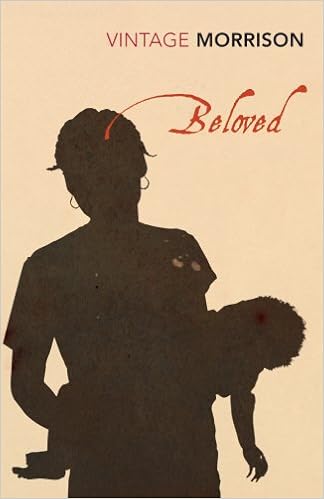
Morrison uses love to bring people together, rip them apart, build them or and tear them down. She is able to manipulate one feeling and action to construct a complex novel that links love with freedom. Through Sethe, and others, Morrison touches on just how capable and compelling love truly is.
Throughout the novel, slavery is experienced and referenced. Morrison uses such a institution to demonstrate just how demolishing the absence of love can be. The enslaved lust after and cry-out for love. With the lack of freedom, there is inevitable shortage of love.
As the novel continues and Sethe gives birth and is forced to face the realization that her baby girl will lead the same devastating life she did. Sethe's love for her daughter prompts her to murder Beloved, as an act of prevention of slavery. She has so much love for her daughter she is about to take her own life just to keep her from her calamitous life as a slave. She believes she has just given Beloved freedom from a lifetime of pain and suffering.
Morrison uses love to bring people together, rip them apart, build them or and tear them down. She is able to manipulate one feeling and action to construct a complex novel that links love with freedom. Through Sethe, and others, Morrison touches on just how capable and compelling love truly is.
Throughout the novel, slavery is experienced and referenced. Morrison uses such a institution to demonstrate just how demolishing the absence of love can be. The enslaved lust after and cry-out for love. With the lack of freedom, there is inevitable shortage of love.
As the novel continues and Sethe gives birth and is forced to face the realization that her baby girl will lead the same devastating life she did. Sethe's love for her daughter prompts her to murder Beloved, as an act of prevention of slavery. She has so much love for her daughter she is about to take her own life just to keep her from her calamitous life as a slave. She believes she has just given Beloved freedom from a lifetime of pain and suffering.
Morrison builds a bond between love and freedom by writing about having the genuine choice to choose who you love. Sethe speaks of this with, "... to get to a place where you could love anything you chose--not to need permission for desire-- well now, that was freedom" (191). She feels pure freedom and power when she can love who she want, how she wants, when she wants.
Through Sethe's trials and actions, Morrison cultivates love in is breath taking light. Beloved suggests that love is a all-powerful feeling that can lead people to do things they never thought they could. As well as the fact that, love will provide natural power and absolute freedom.
The Power of Maternal Love
In Toni Morrison's novel Beloved, the main character Sethe is a mother, the mother of 4 children before the age of 20. She is a valiant defender of her children, and they are the reason for her flight from slavery. One of the most chilling sections of the book is the scene of Sethe in the woodshed when she kills Beloved while the rest of her children were in the shed with her. Her fear over her children being taken into slavery was so powerful that she is willing to kill them rather than them being taken into bondage.
This is a testament to both the insanity and inhumanity of slavery as well as the power of a mother's love. When explaining the emotions during the arrival of the slave catchers, everything is described in a whirlwind of movement, Sethe's actions simply a defense mechanism. Everything she holds dear to her is grabbed in the moments of panic, everything she holds dear being her children. Later she defends her actions to Paul D, saying that she did what she had to in the moment and, keeping her children from slavery was her only priority.
Even though Howard and Bulgar, and Beloved a little bit, had lived in slavery, none of them were old enough to fully grasp the worst parts of it. Everything Sethe does is for the safety of her children, what she believes will be the best thing possible for them. The choice to try to kill them was not even so much a choice as an instinct to protect them from what Sethe knew to be the worst thing possible.
It is surprising to me that the entire community shuns Sethe after the incident in the woodshed because some of them were definitely mothers and as many of them had lived in slavery I would have thought that they would defend Sethe.
Motherly love may be dangerous, but it is the mother's duty to keep her children safe and that will come before everything.
This is a testament to both the insanity and inhumanity of slavery as well as the power of a mother's love. When explaining the emotions during the arrival of the slave catchers, everything is described in a whirlwind of movement, Sethe's actions simply a defense mechanism. Everything she holds dear to her is grabbed in the moments of panic, everything she holds dear being her children. Later she defends her actions to Paul D, saying that she did what she had to in the moment and, keeping her children from slavery was her only priority.
Even though Howard and Bulgar, and Beloved a little bit, had lived in slavery, none of them were old enough to fully grasp the worst parts of it. Everything Sethe does is for the safety of her children, what she believes will be the best thing possible for them. The choice to try to kill them was not even so much a choice as an instinct to protect them from what Sethe knew to be the worst thing possible.
It is surprising to me that the entire community shuns Sethe after the incident in the woodshed because some of them were definitely mothers and as many of them had lived in slavery I would have thought that they would defend Sethe.
Motherly love may be dangerous, but it is the mother's duty to keep her children safe and that will come before everything.
Tuesday, November 7, 2017
Dangerous Love
Stamp Paid shows Paul D a newspaper clipping of Sethe but Paul D is convinced it is not her, "That it's not her mouth"(183). Paul D can not read so Stamp Paid tells him the story about Sethe leaving out some parts of the story so later Paul D confronts Sethe. When Paul D confronts Sethe the narrator describes, "And if she thought anything, it was No. No. Nono. Nonono. Simple. She just flew. Collected every bit of life she had made, all the parts of her that were precious and fine and beautiful, and carried, pushed, dragged them through the veil, out, away, over there where no one could hurt them. Over there. Outside this place, where they would be safe"(192). Sethe sees her decision to kill her children as "simple". She wanted to secure her children's safety and sending them back to Sweet Home was not safe. Also Sethe describes her children as "the parts of her that were precious and fine and beautiful". Therefore by allowing the teacher to take them back would be allowing him to destroy everything good about herself. After Paul D learns of what Sethe did he tries to find an explanation for it says she has two legs and not four, meaning she is not an animal. Paul D believes she can not justify what she did and she was wrong. My question is do you believe that Sethe was justified in trying to kill her children?
I think that we or anyone can't really argue if she was justified. I mean we could have a discussion about it and express our opinions but we can't say it was wrong. In my opinion Paul D was in the wrong for telling Sethe that she was wrong for doing what she did. He or anyone else especially us in the present day will never truly understand what Sethe had to go through. Yes, it is wrong to kill your children but she was killing them to save them. Which in a sick and deep way makes since to me. The children probably would have been better off dead then going through slavery. Are you really living if you aren't free? No. So death she felt was her only option. However, if Beloved really is the reincarnation of the dead baby and she isn't happy in the afterlife then what Sethe did was for nothing. But there was no real way for Sethe to know that so we can judge her for it.
Sunday, October 29, 2017
Love to Trust or Trust to Love?
In Hal Hartley's film Trust, Maria Coughlin has just been dumped after telling her high school sweetheart that she is pregnant with his child. The boyfriend revokes all previous statements of love and support he has given to her, and screams at her to get away, as he has to focus on getting a football scholarship for college. Because of his sudden abandonment and empty promises, Maria's quest to find trust and love carries her throughout the rest of the film. A common criticism of young love is how naive and suffocating it can be. Maria exemplifies the typical unsophisticated and malleable young person, who then goes on to think they understand the world simply because of this experience. The issue I take with this movie and primarily this character, is how she uses this past relationship in order to find the exact opposite of it in her next, rather than taking the time to reflect and learn. Her immediate reaction to her break up, is to find what she now thinks is real love, someone to trust. However, in my opinion, trust does not have to be present in order to love someone. Part of what love is, which is a popularized opinion, is that to love another is to risk your own well being to feel validated and supported in return. Maria's naive and protective response to her initial break up pushes her into a relationship with a stranger, who, one could argue, is the first person in her life to worry about her health and happiness. She requires this boyfriend, Mathew, to promise her that love requires trust, admiration, and respect. This forceful and insecure route to feel she is in love pushes her to get into unsafe situations solely on the basis of her wanting to feel what she didn't get out of the first relationship. I believe people can love each other without trusting, especially if we are to differentiate love and being in love. Being in love is a far more selfish and individualistic philosophy on love; which if anything, is where Maria and Mathew are at.
Thursday, October 26, 2017
Respect+Admiration+Trust= Love
When you ask people what love is they usually can't describe it. They say something along the lines of, "You have to experience it to know what it feels like," or "It's not something you put into words." In the film Trust, the character of Maria believes that love can be defined, and that there is a simple formula for it--respect, admiration, and trust. In this film, Hal Hartley explores many socially constructed systems, some of which being love and marriage.
None of the characters in the entire movie had happy marriages. Maria's mom was freed when her husband died, Matthew's dad lived alone, the woman at the bus stop was so bored of her marriage that she stole a baby, and Peg is divorced and has kids. Marriage is portrayed as just something that people do, and then they always end up being unhappy because of their choice. Maria asks her sister, if she misses her kids and hates her husband, and Peg answers yes to both questions. Maria then asks if she would get married again, and Peg replies "of course." Like many of the characters in the film, marriage ruined them, but they would still do it again. This is a clear commentary on the downfalls of the societal construction of marriage. If it makes people unhappy, then why do they do it? There is no reason other than it is what society expects people to do.
The one relationship that I have not yet mentioned is that of Maria and Matthew. Though they do not end up getting married, they do get engaged and discuss the concept of love. Matthew accepts Maria's equation for love and asks her to marry him. However, on their path to get married, the viewer sees them prematurely slipping into the consequences that come along with marriage. Most notably, there is a scene where Maria comes home and see Matthew sitting on the couch watching TV. She says to him, " Your job is making you boring and mean," and he replies, "My job is making me a respectable member of society." They are on their way to marriage, jobs, and other systems people have to buy into to be considered "respectable members of society,"and because of this, Matthew is already becoming boring and loosing the characteristics that make him special to Maria. This exchange is an example of the ways that socially constructed systems change people in a negative way and stop them from living happy lives.
From Maria's formulaic view of love to the overwhelming portrayal of characters unhappy with marriage, Hal Hartley's Trust causes the viewer to question the ideas of love and marriage. Could Maria and Matthew ever be happily married? Do they love each other? Could they ever be together without changing each other or letting society change them?
None of the characters in the entire movie had happy marriages. Maria's mom was freed when her husband died, Matthew's dad lived alone, the woman at the bus stop was so bored of her marriage that she stole a baby, and Peg is divorced and has kids. Marriage is portrayed as just something that people do, and then they always end up being unhappy because of their choice. Maria asks her sister, if she misses her kids and hates her husband, and Peg answers yes to both questions. Maria then asks if she would get married again, and Peg replies "of course." Like many of the characters in the film, marriage ruined them, but they would still do it again. This is a clear commentary on the downfalls of the societal construction of marriage. If it makes people unhappy, then why do they do it? There is no reason other than it is what society expects people to do.
The one relationship that I have not yet mentioned is that of Maria and Matthew. Though they do not end up getting married, they do get engaged and discuss the concept of love. Matthew accepts Maria's equation for love and asks her to marry him. However, on their path to get married, the viewer sees them prematurely slipping into the consequences that come along with marriage. Most notably, there is a scene where Maria comes home and see Matthew sitting on the couch watching TV. She says to him, " Your job is making you boring and mean," and he replies, "My job is making me a respectable member of society." They are on their way to marriage, jobs, and other systems people have to buy into to be considered "respectable members of society,"and because of this, Matthew is already becoming boring and loosing the characteristics that make him special to Maria. This exchange is an example of the ways that socially constructed systems change people in a negative way and stop them from living happy lives.
From Maria's formulaic view of love to the overwhelming portrayal of characters unhappy with marriage, Hal Hartley's Trust causes the viewer to question the ideas of love and marriage. Could Maria and Matthew ever be happily married? Do they love each other? Could they ever be together without changing each other or letting society change them?
Monday, October 16, 2017
Contradicting an Existentialist View: Is Love Really Real?
On the specific day where all hell broke loose in our class period, several aspects of the conversation did not sit well with me or my fellow classmates. Mr. Heidcamp was trying to get a rise out of us, make us feel uncomfortable in our seats. And for the most part, it worked extremely well. Classmates refuted Mr. Heidcamp's existential comments no matter how well he backed up his argument. Existentialism is a hard humanism to accept on several terms.
The hardest "cover up" to comprehend and understand is by far Mr. Heidcamp's argument about love. He stated that, "We get our meaning of love from TV shows and movies," and that it is just a cover for the pain, suffering, and death that is taking place in other parts of the world. This could be true on some levels, that we look to love for comfort and support in times of grief and agony. We establish loving relationships solely so we have someone's shoulder to cry on. As a people, we may be able to forget about the terrible event that took place faster if we just get through it together. To this argument, I slightly agree. Not wholeheartedly, but slightly. There is a slight point to this proclamation. In times of my life such as the massacre that just occurred in Las Vegas, I turn to close relationships which consists of family and friends that I love and have strong connections with.
Although Mr. Heidcamp has a valid point, I more strongly disagree with his statement. Where did we get the idea of love in the first place? Before the movies and the TV shows? Where did we get the idea to marry one another? I surely believe that it wasn't from a romantic TV series or movie. It was from our human emotions and feelings that love came out of, not a screen. Love is not learned, it is in your DNA from the day you are born. When you were in elementary school, did you ever have a crush on someone, and have a feeling of butterflies rush into stomach? If not, you are probably lying. We did not learn this information from watching Elmo and Thomas the Train Engine, so where else could we have gotten this information at such a young age? It is predetermine in our genes, not learned an accepted.
Those are just my thoughts on this rather complicated topic. Do you guys agree or disagree with me or Mr. Heidcamp? Or, do you fall somewhere in between?
The hardest "cover up" to comprehend and understand is by far Mr. Heidcamp's argument about love. He stated that, "We get our meaning of love from TV shows and movies," and that it is just a cover for the pain, suffering, and death that is taking place in other parts of the world. This could be true on some levels, that we look to love for comfort and support in times of grief and agony. We establish loving relationships solely so we have someone's shoulder to cry on. As a people, we may be able to forget about the terrible event that took place faster if we just get through it together. To this argument, I slightly agree. Not wholeheartedly, but slightly. There is a slight point to this proclamation. In times of my life such as the massacre that just occurred in Las Vegas, I turn to close relationships which consists of family and friends that I love and have strong connections with.
Although Mr. Heidcamp has a valid point, I more strongly disagree with his statement. Where did we get the idea of love in the first place? Before the movies and the TV shows? Where did we get the idea to marry one another? I surely believe that it wasn't from a romantic TV series or movie. It was from our human emotions and feelings that love came out of, not a screen. Love is not learned, it is in your DNA from the day you are born. When you were in elementary school, did you ever have a crush on someone, and have a feeling of butterflies rush into stomach? If not, you are probably lying. We did not learn this information from watching Elmo and Thomas the Train Engine, so where else could we have gotten this information at such a young age? It is predetermine in our genes, not learned an accepted.
Those are just my thoughts on this rather complicated topic. Do you guys agree or disagree with me or Mr. Heidcamp? Or, do you fall somewhere in between?
Thursday, October 5, 2017
What is love?
Nothing in Meursault's life provokes an emotional reaction, demonstrating his shallow personality. A component of this includes his relationships. Meursault and Marie's relationship is an unfortunate example of this. The one sided relationship demonstrates his lack of a deeper emotional connection. On page 41, Meursault narrated, "Marie came by to see me and asked me if I wanted to marry her. I said it didn't make any difference to me and that we could if she wanted to." His reaction was so nonchalant to a topic that has such a seriousness to it. Which illuminates his shallow character, as he did not care about Marie's feelings to his reaction. His diction was so casual, so unattached. Reading his response made me so frustrated because Marie isn't acknowledging his shallowness, as she stayed with him instead of breaking up with him in that instance! His relationship with Marie poses the question for me as to whether there are people out there like Meursault who seriously have no emotional connection or feeling to other people. How can Meursault treat people, especially Marie-a romantic partner, with such indifference?
Mersault's Apathetic Mask
In Albert Camus' The Stranger, Mersault's relationship to Marie is atypical to say the least. Though Mersaults puts up an apathetic and detached exterior, he generally allows himself to show a romantic interest in Marie. However, when Marie asks Mersault to marry her, he acts strangely aloof and indifferent about her; demonstrating an inner conflict in which he has strong emotions but tries to suppress them to appear emotionless.
Starting from the opening line of the story, Mersault remains detached and apathetic about the world, unphased by even his own mother's death. However, he still has strong feelings for Marie, as evidence by his repeated visits to her and acknowledgement of the fact that he wants her and to be with her. At first, it appears that Marie is the one thing in life which Mersault's nihilist nature has yet to conquer. When Marie asks Mersault to marry him and he claims that "it [doesn't] make any difference" and the he "probably doesn't" love her, this theory comes into question.
If Mersault were truly emotionless with Marie being the one exception, he would feel no need to hide his emotions from her. He would be free with the fact that Marie is the exception. But Mersault does deny his feelings, suggesting that his apathy is an image he works to maintain, rather than a state in which he exists without Marie. When Marie becomes distressed at his indifference, he reassures Marie that they can get married, but only if she wants. He clearly wants to maintain his connection with her, but he feels as though he cannot allow himself to want that connection, it must be her want that he is simply going along with. He forces upon himself the state of not caring, even though he does care about Marie and does not want to upset her.
Marie notices this, commenting on how peculiar Mersault is and that she loves him for it but that later, he "might hate her for the same reason". Marie loves Mersault despite his tough exterior because she can still access the tenderness underneath. However, she fears that he will become so secluded that not even she can break through his shell, that his apathetic image will begin to truly take over him to the point where he can no longer escape the act. Is this perhaps why she asked Mersault to marry her so suddenly; she realized that she had limited time before his ruse was no longer a ruse, his forced apathy became natural, and she lost the ability to draw romance out of his indifference?
Starting from the opening line of the story, Mersault remains detached and apathetic about the world, unphased by even his own mother's death. However, he still has strong feelings for Marie, as evidence by his repeated visits to her and acknowledgement of the fact that he wants her and to be with her. At first, it appears that Marie is the one thing in life which Mersault's nihilist nature has yet to conquer. When Marie asks Mersault to marry him and he claims that "it [doesn't] make any difference" and the he "probably doesn't" love her, this theory comes into question.
If Mersault were truly emotionless with Marie being the one exception, he would feel no need to hide his emotions from her. He would be free with the fact that Marie is the exception. But Mersault does deny his feelings, suggesting that his apathy is an image he works to maintain, rather than a state in which he exists without Marie. When Marie becomes distressed at his indifference, he reassures Marie that they can get married, but only if she wants. He clearly wants to maintain his connection with her, but he feels as though he cannot allow himself to want that connection, it must be her want that he is simply going along with. He forces upon himself the state of not caring, even though he does care about Marie and does not want to upset her.
Marie notices this, commenting on how peculiar Mersault is and that she loves him for it but that later, he "might hate her for the same reason". Marie loves Mersault despite his tough exterior because she can still access the tenderness underneath. However, she fears that he will become so secluded that not even she can break through his shell, that his apathetic image will begin to truly take over him to the point where he can no longer escape the act. Is this perhaps why she asked Mersault to marry her so suddenly; she realized that she had limited time before his ruse was no longer a ruse, his forced apathy became natural, and she lost the ability to draw romance out of his indifference?
Wednesday, October 4, 2017
Meursault in Albert Camus's "The Stranger" Comparison to Junot Diaz's Main Character in "Edison, New Jersey"
Meursault throughout Albert Camus's book The Stranger is portrayed from the beginning to be a selfish and uncaring human being. Meursault seems to lack love for anything or anyone except himself. For instance on page 6 when the caretaker asks if he wants to see his mother's body, Meursault replies, "'No.' He was quiet, and I was embarrassed because I felt I shouldn't have said that." When the character asks why he does not want to see his mother a few sentences later, Meursault simply replies, "I don't know." Undoubtedly, this response to his mother's death gives the reader a sense that Meursault truly is an uncaring human being. Meursault has not seen his mother in what the reader can infer as quite a while and he does not even bother to say goodbye forever. This is an insult to his mother's life because it is as if his mother never meant anything to him. Again, when asked on page 9 if he would like to see his mother one last time, he quite plainly responds no. Evidently, Meursault's life lacks meaning because he does not even care for one's who love him. He has no personal goals to reach for himself and is wandering aimlessly through his life.
Furthermore, Meursault can be more interpreted as a man who has lost his way. In chapter 5, his "girlfriend" asks him to marry him twice, his response is dull. On page 41, the text reads, "I said it didn't make any difference to me and that we could if she wanted to." This is one of the most important decisions of his life and he still has no care for it. He puts the choice on Marie, his girlfriend, and not himself. This further exhibits Meursault's inability to make decisions for himself and his lack of personal goals. He is gliding through life, taking each day as it comes, but is not really living. He avoids most important decisions in his life because they do not matter to him.
A character that relates to Meursault the most is the main narrator from Junot Diaz's short story Edison, New Jersey. The main narrator throughout the story seems lost, with no sense of direction in life. He is going through every day, taking risks in hope for something to come out of the opportunities that arise. For example, at the end of the story when the main narrator comes back from New York to drop of the woman, his coworker asks, "Was it worth it," and "Did you at least get some?". Even though he simply dropped off the woman and came straight back, he replied,"Hell yeah." This exemplifies that the narrator's goals was to get something out of taking the woman to New York, whether a relationship or sex. Just like Meursault, the narrator in Edison, New Jersey has no personal goals and is going through life without really living it.
What is going on with these two characters? Why do they just sit back and observe life, letting it pass right before them?
Furthermore, Meursault can be more interpreted as a man who has lost his way. In chapter 5, his "girlfriend" asks him to marry him twice, his response is dull. On page 41, the text reads, "I said it didn't make any difference to me and that we could if she wanted to." This is one of the most important decisions of his life and he still has no care for it. He puts the choice on Marie, his girlfriend, and not himself. This further exhibits Meursault's inability to make decisions for himself and his lack of personal goals. He is gliding through life, taking each day as it comes, but is not really living. He avoids most important decisions in his life because they do not matter to him.
A character that relates to Meursault the most is the main narrator from Junot Diaz's short story Edison, New Jersey. The main narrator throughout the story seems lost, with no sense of direction in life. He is going through every day, taking risks in hope for something to come out of the opportunities that arise. For example, at the end of the story when the main narrator comes back from New York to drop of the woman, his coworker asks, "Was it worth it," and "Did you at least get some?". Even though he simply dropped off the woman and came straight back, he replied,"Hell yeah." This exemplifies that the narrator's goals was to get something out of taking the woman to New York, whether a relationship or sex. Just like Meursault, the narrator in Edison, New Jersey has no personal goals and is going through life without really living it.
What is going on with these two characters? Why do they just sit back and observe life, letting it pass right before them?
Subscribe to:
Posts (Atom)